Food Safety
Unmatched Almond Quality from Seed to Shelf
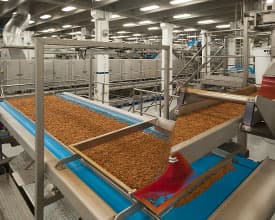
Our roughly 3,000 grower-owners enable reliable supply for food and beverage manufacturers and year-round access to the largest quantities of almond ingredients. Our extensive regulatory knowledge, quality control efforts, and industry-leading safety processes help ensure you receive high-quality products every time.
Blue Diamond Facilities:
- Are certified by the Safe Quality Food (SQF) Program and Global Food Safety Initiative (GFSI).
- Are audited against the Sedex Members Ethical Trade Audit (SMETA) system.
- Use a processing approach to help address common skin flaking issues and maintain desired texture.
- Exceed foreign material requirements of confectionary grade product by achieving 0.0002%, or 1 piece in 1,000lbs of product.
- Have an on-site, ISO-accredited quality assurance laboratory is certified for aflatoxin analysis.
Almond Storage Guidelines
Almonds have natural antioxidants that promote a long shelf life. In fact, they can retain their goodness longer than many other nuts and can be carried over from one year to the next by maintaining certain safeguards and controlled conditions. To prolong the shelf life of roasted products, packaging is crucial.
To prevent oxidation and maintain optimum flavor:
- Store or display almonds in cool, dry, odor-free conditions.
- Avoid prolonged exposure to direct sunlight, which tends to darken shelled almonds and decrease their stability.
- Avoid exposure to strong odors, as almonds can absorb the odors of other materials, chemicals, and pungent foods.
- Rotate to optimize shelf life.
- Almonds can be stored frozen, which extends the shelf life significantly; however, proper packaging must be used to protect them from ice formation and moisture.
Can’t find what you’re looking for or need to request product specifications?