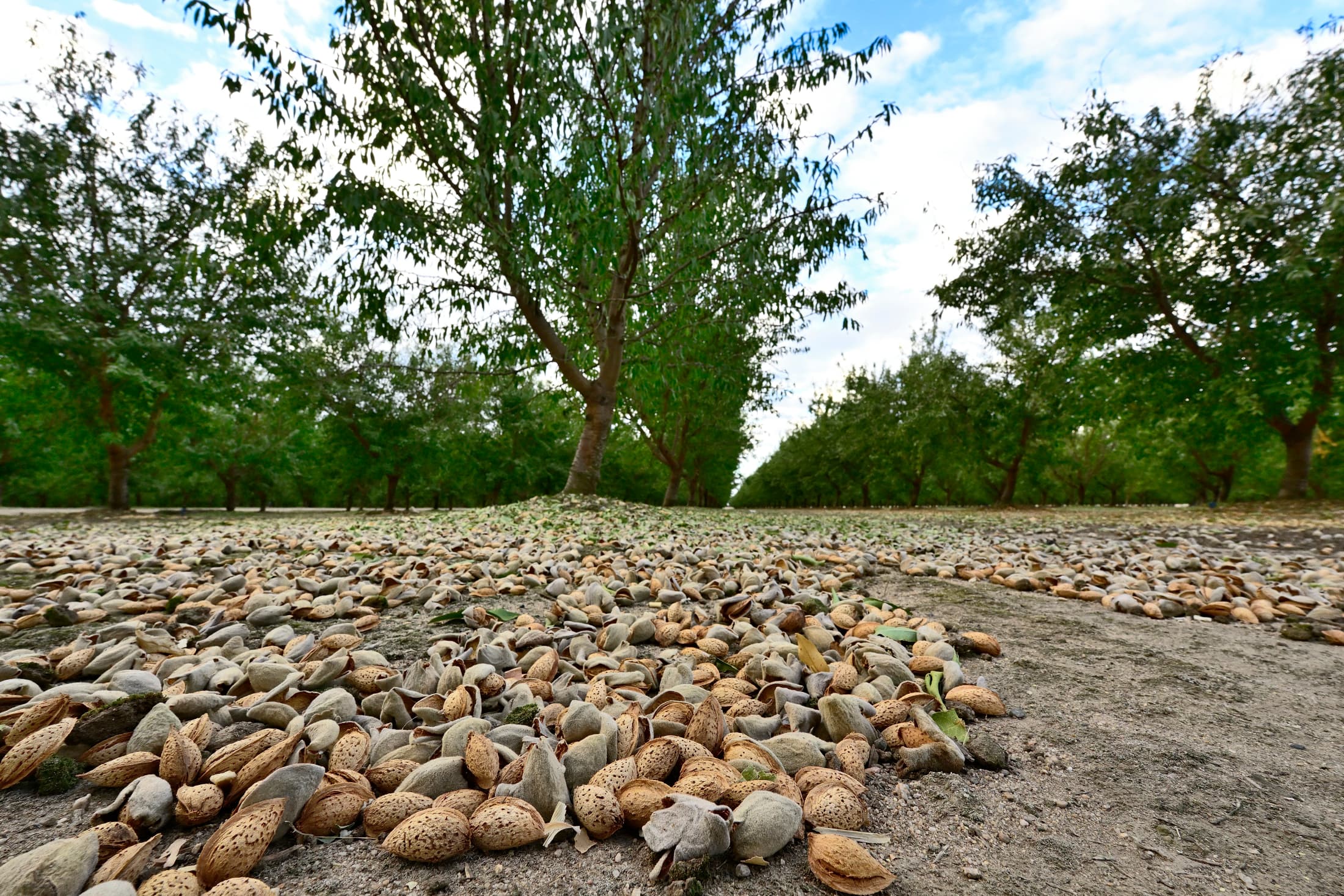
Crop Progress Report – September 28, 2026
This report covers the conditions and activities observed from Monday, August 31, through Sunday, September 27, 2026. The next report is scheduled for Monday, October 26, 2026. In the event of any significant occurrences prior to that date, this site will be updated as soon as possible.
Warm, dry conditions dominated the weather in California’s central valley during September, providing good support for the 2026 harvest. Daily maximum temperatures ranged predominately between mid-80’s and mid-90’s with highest readings report throughout the valley on September 10th at just over 100 degrees. Meanwhile, morning lows ranged predominately from the lower 50’s with highest values climbing into the lower 60’s and chilliest readings bottoming out briefly in the upper 40’s.
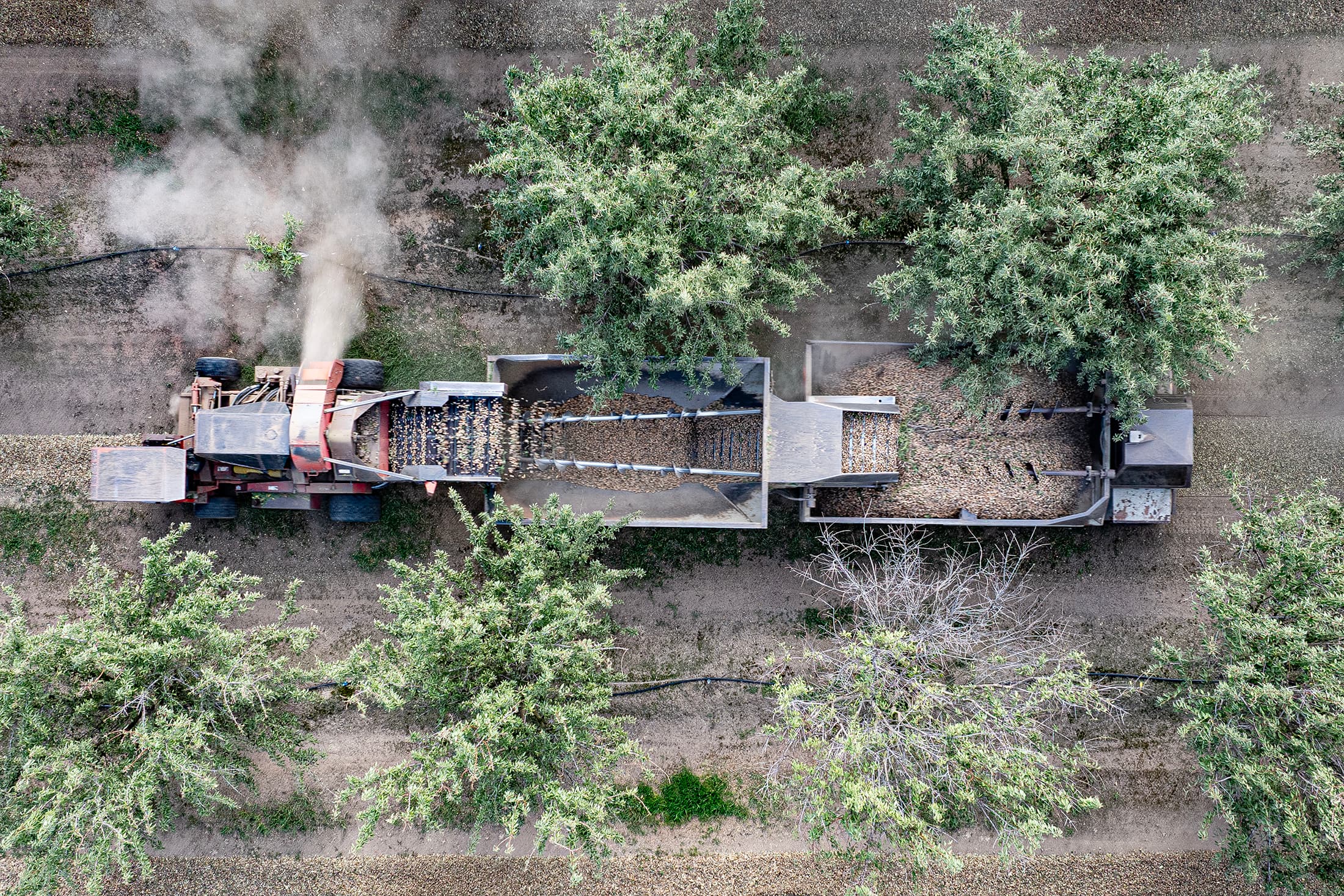
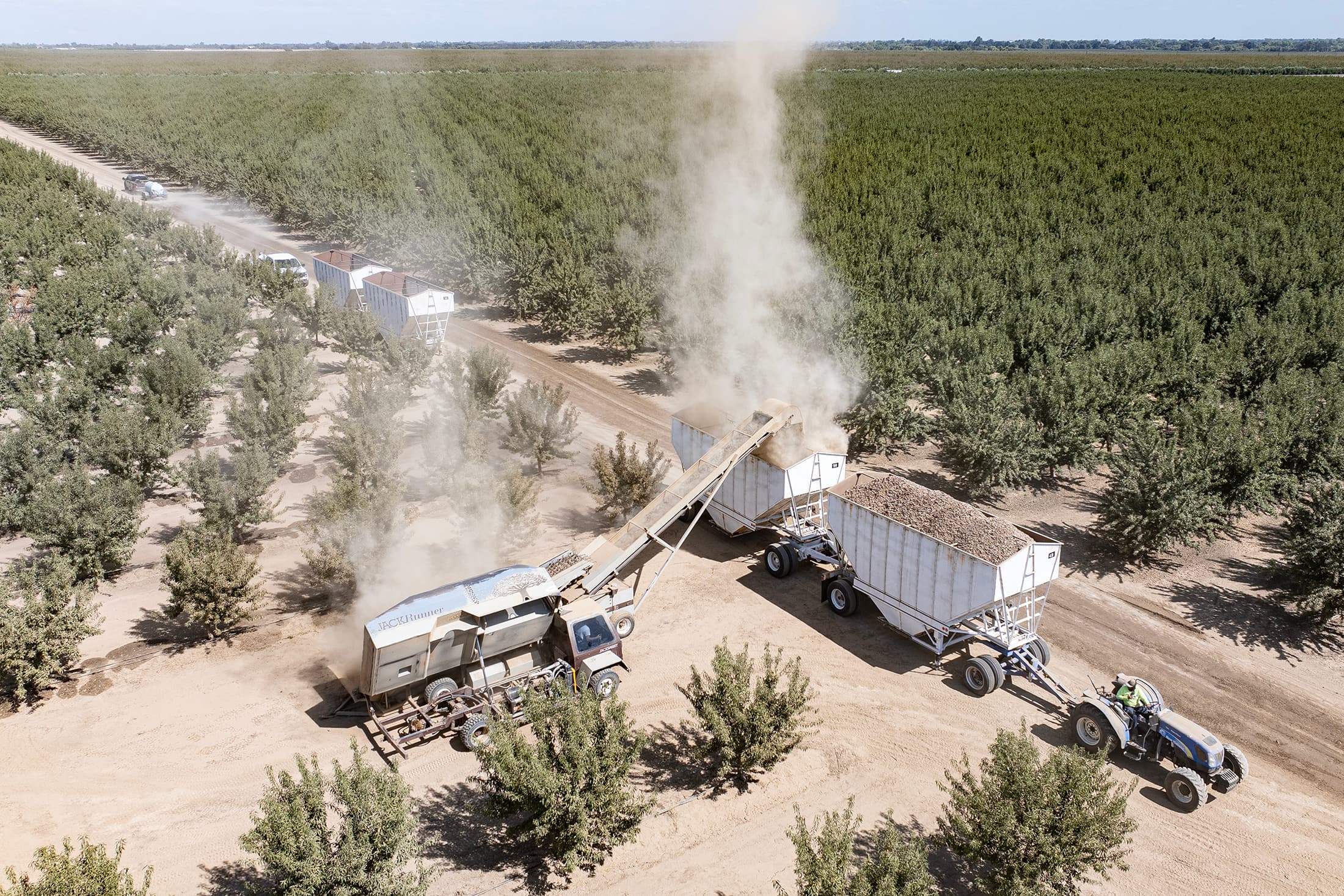
The transition from summer to fall brings shorter days and increased opportunities for morning dew, which can conspire to reduce the hours available to pick up windrowed product. Fortunately, the conditions experienced during September prevented any significant challenges. This has allowed growers to move rapidly through their orchards, taking advantage of the compressed nature of the 2026 harvest. Observers are reporting that only a handful of Nonpareil and Independence remained to be harvested at the end of the period, while advanced examples of late maturing Monterey and Fritz have already been picked up.
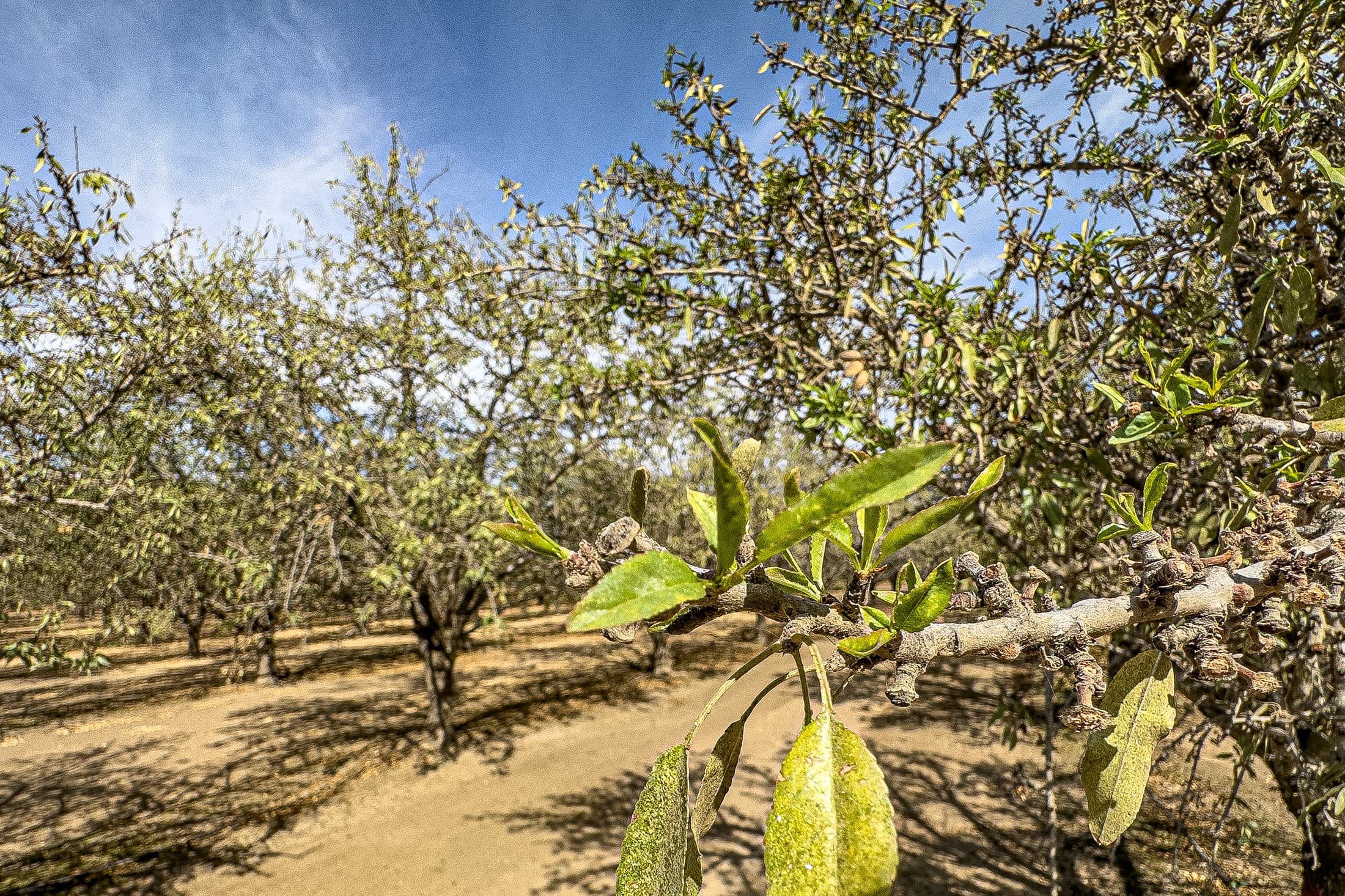
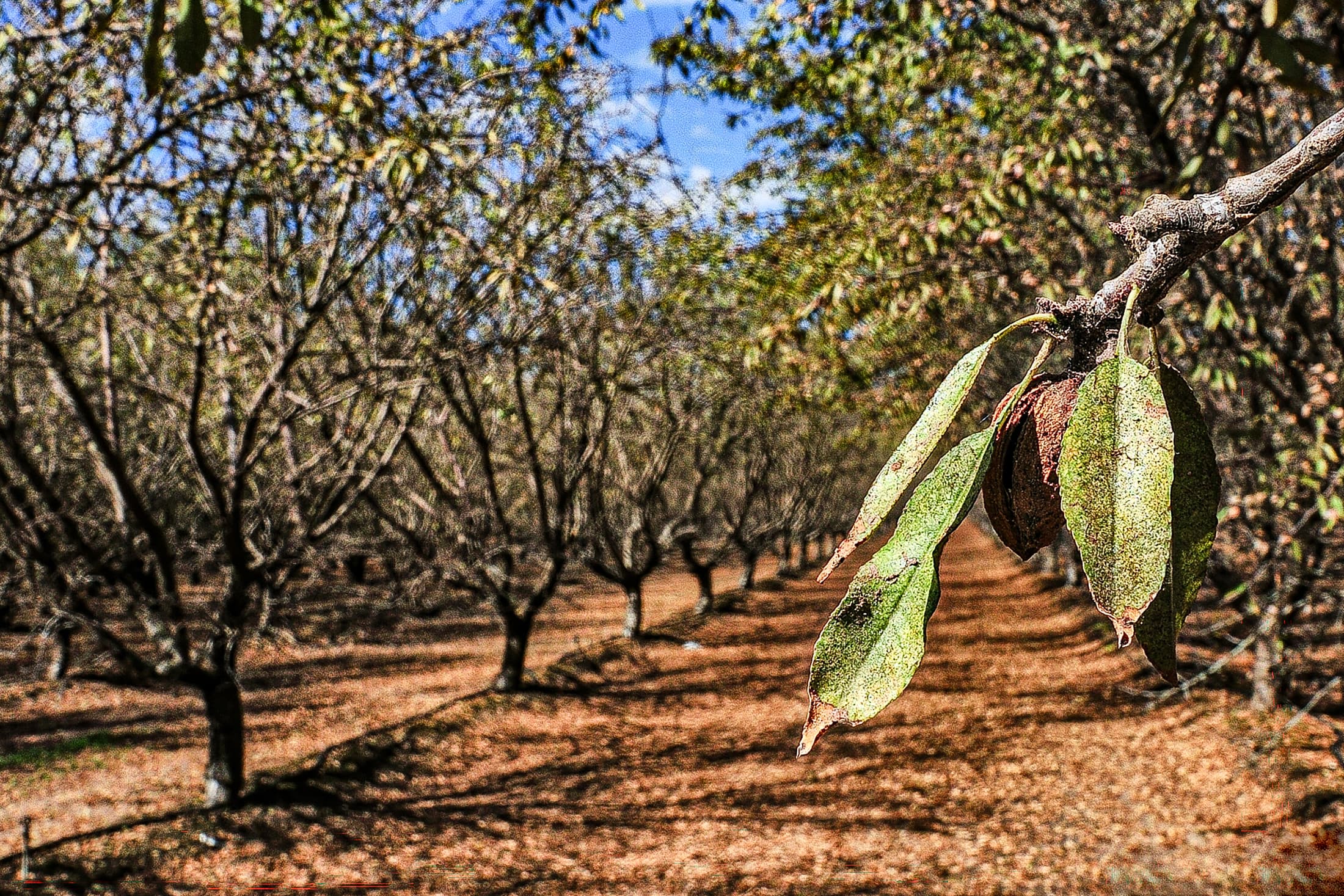
As noted in our previous report, spider mites have caused significant defoliation in many orchards throughout the central valley. While not every orchard has been impacted, the most significantly infested orchards have lost nearly all the leaves and have started to “push” new leaves. Given that this represents next year’s energy reserves being expended this year, these orchards face potential adverse impacts on their 2027 crop.
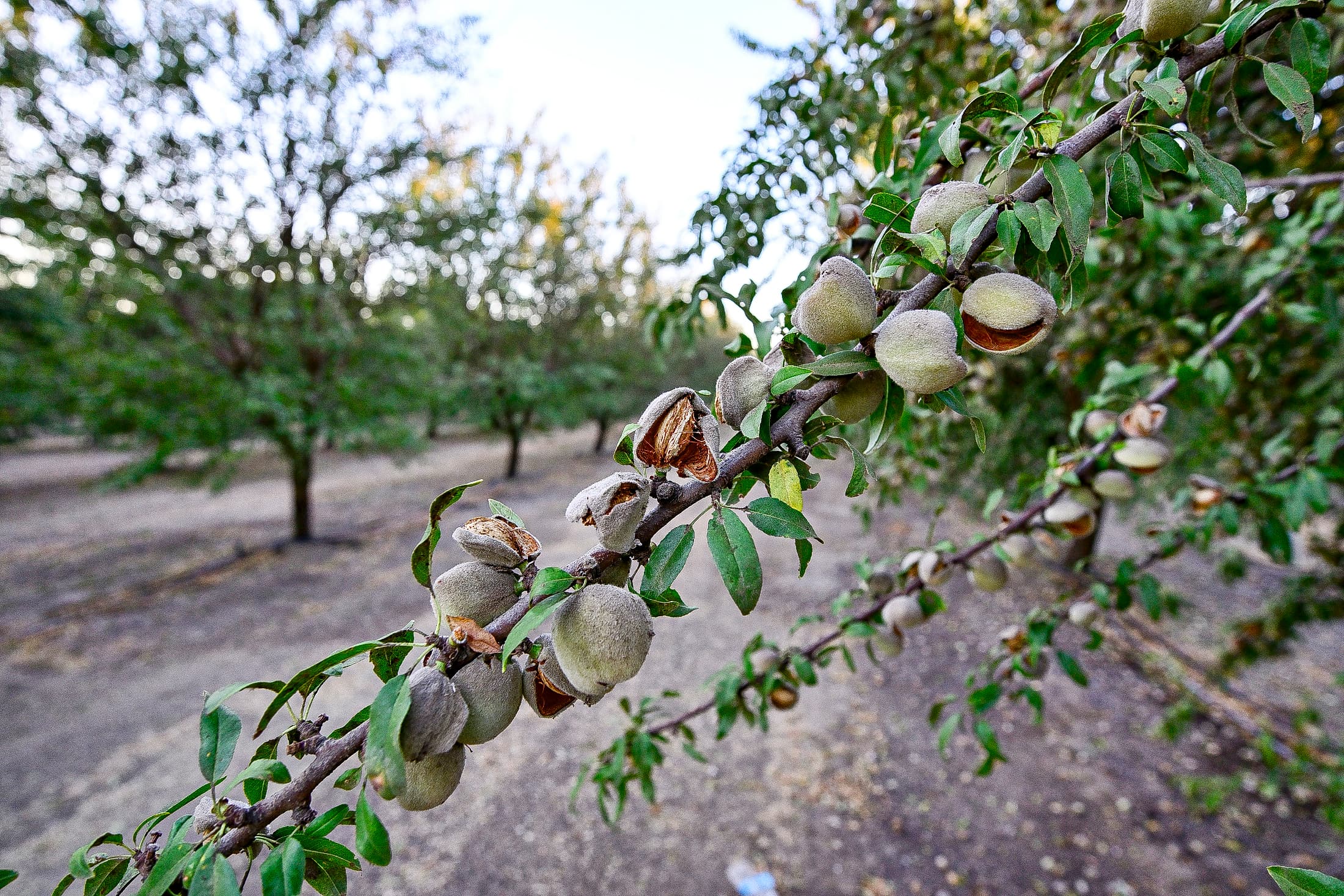
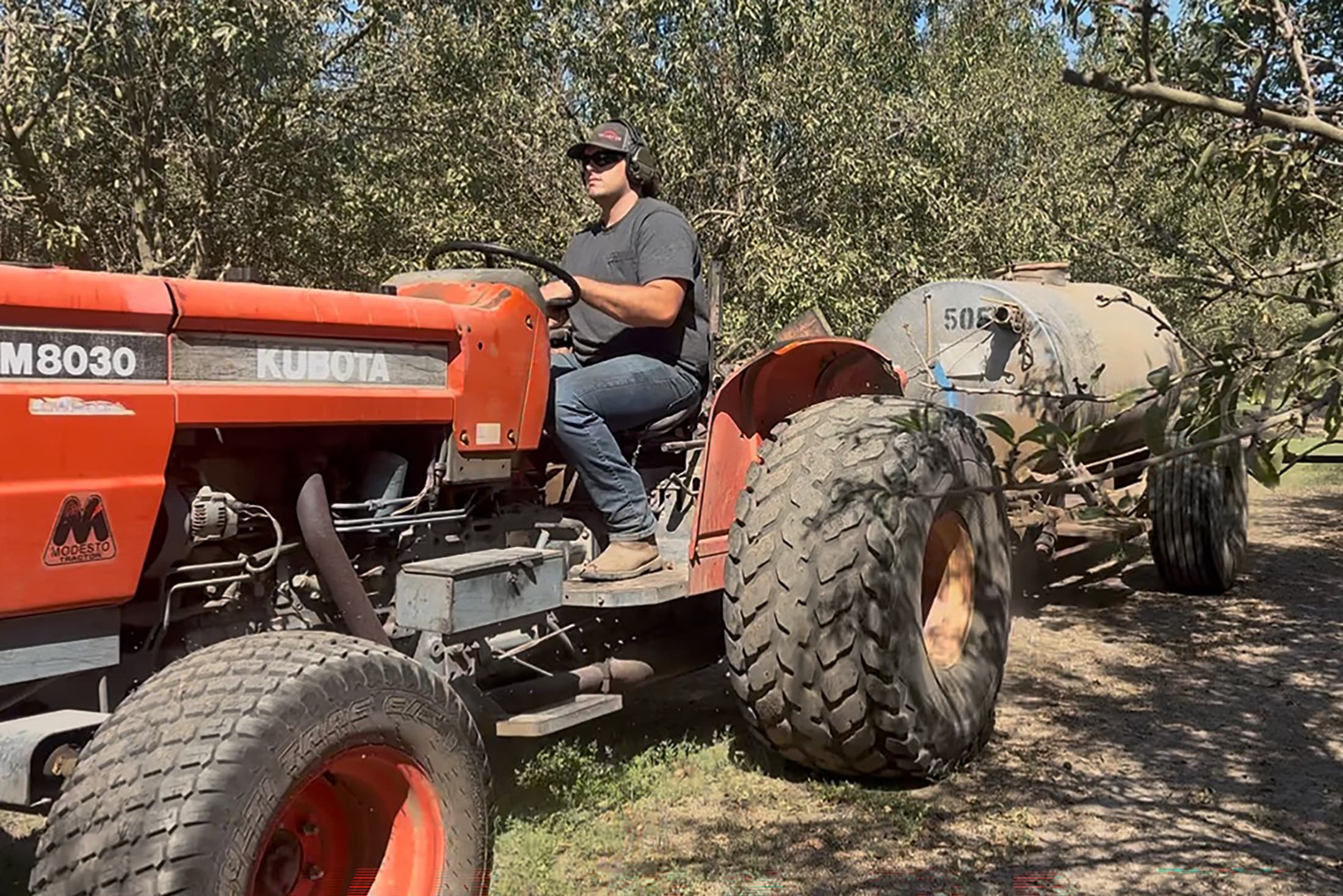
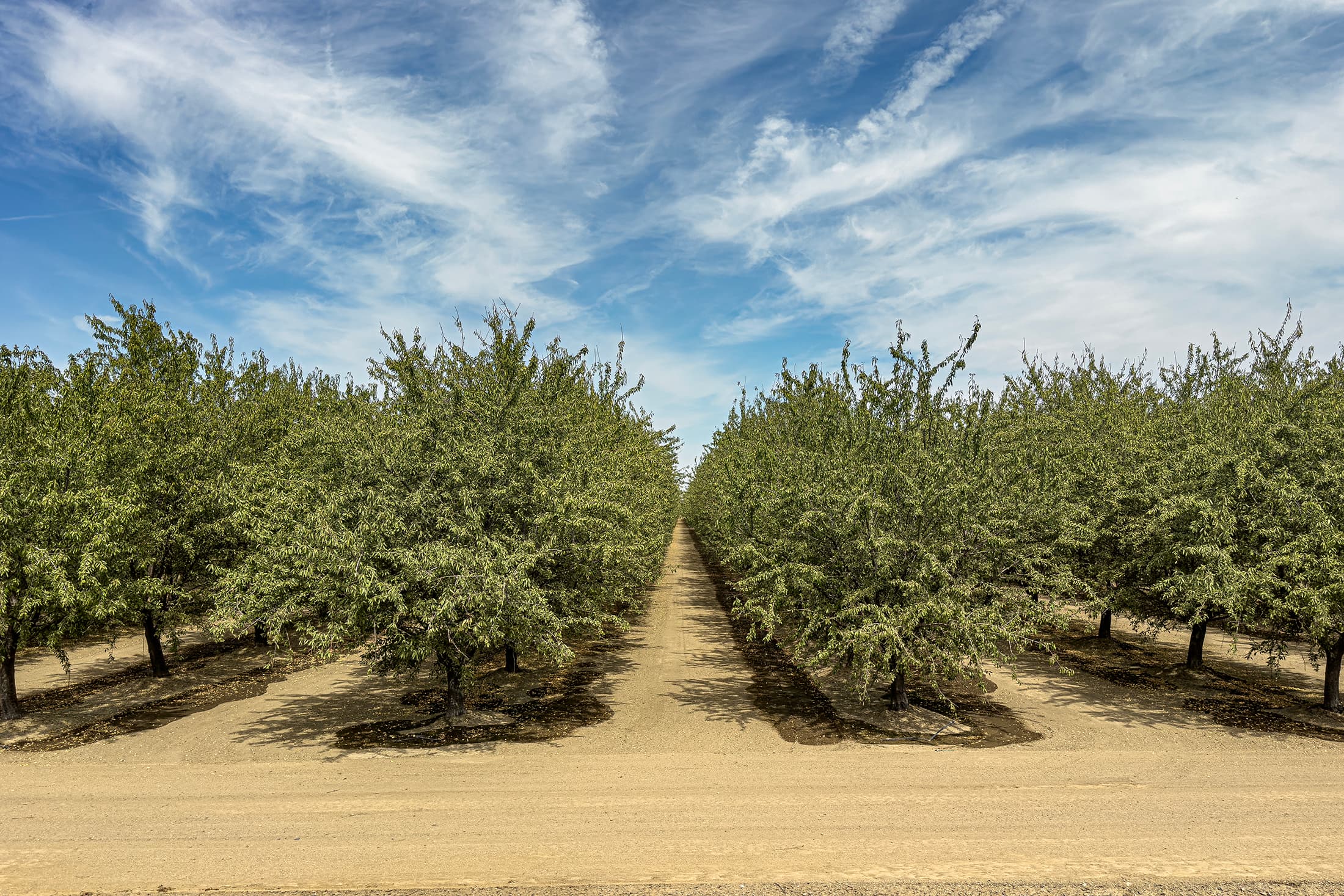
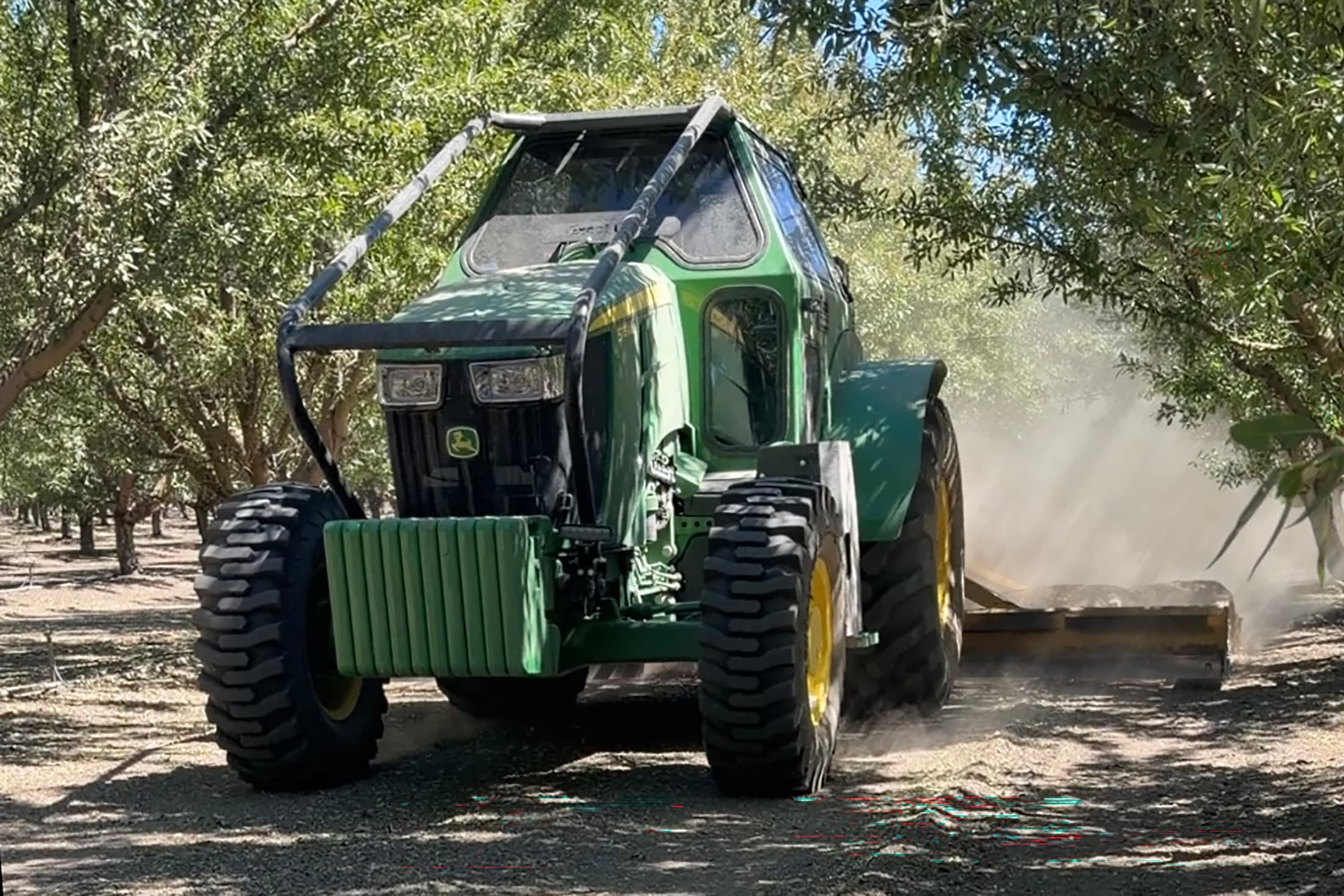
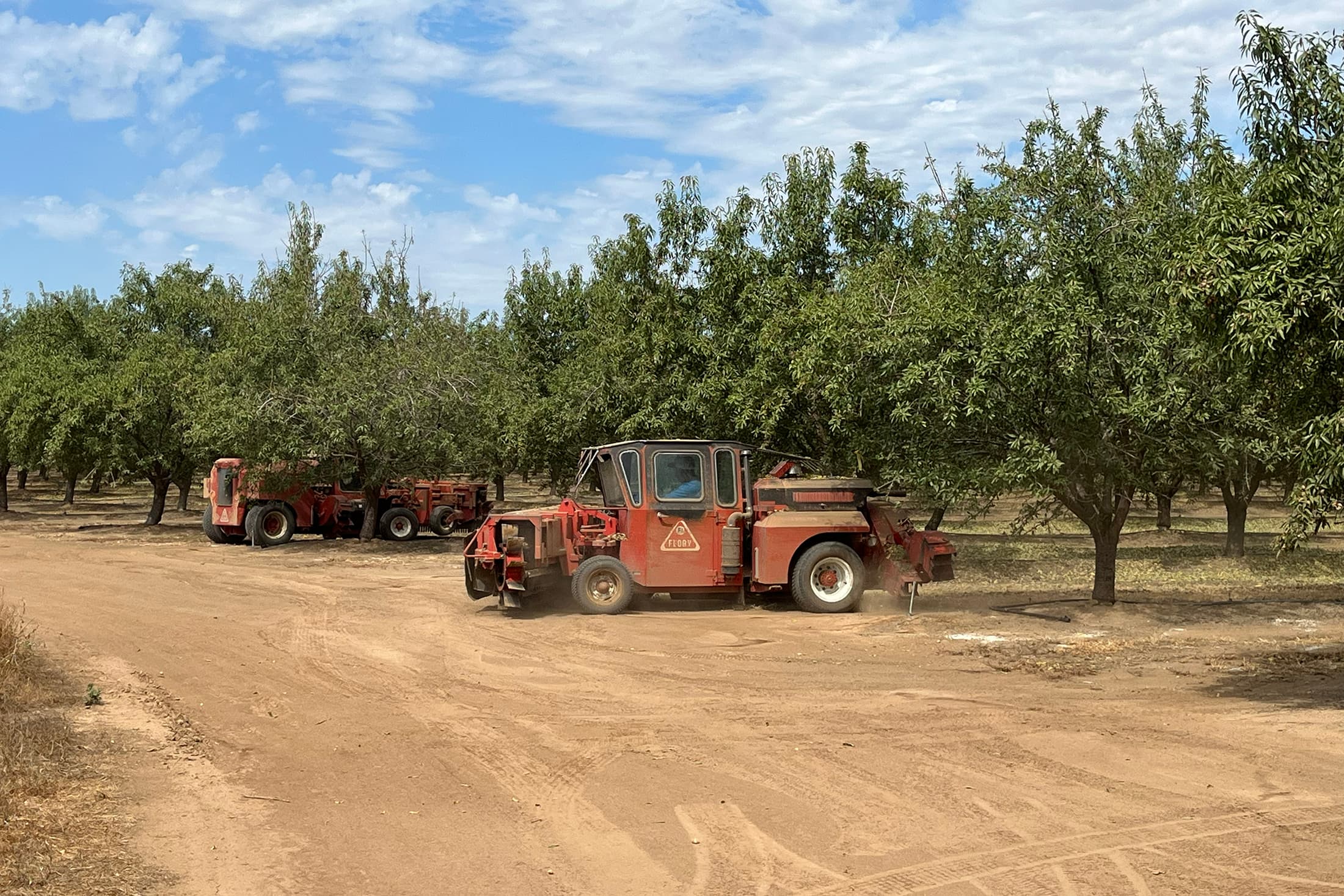
With the completion of harvest within each orchard, growers quickly begin post-harvest activities. Irrigation becomes the most critical activity as growers work to restore root zone moisture levels that were depleted during the harvest. As shown in the photos accompanying this report, fertilizer applications and smoothing of the orchard floor are also prime activities.
Reject levels due to navel orangeworm, NOW, have increased slightly as the harvest has progressed, the result of the third “flight,” where adult moths have laid eggs on hulls in orchards waiting to be shaken. Damage levels remain the lowest experienced in several years. But later harvesting orchards have experienced higher levels of damage. Brown Spot, the damage caused by plant bugs, particularly stink bugs continue to cause problems for growers with Independence plantings. Stink bugs are particularly attracted to Independence and are very difficult to control. While cultural practices and procedures have been developed that can mitigate damage from NOW, university research has not yet produced successful means of limiting losses due to stink bug.
As noted in our previous report, growers are reporting that per-acre yields are generally running below levels experienced in the 2025 crop. Reports of small kernels sizes have continued as growers move into later maturing varieties.
By Mel Machado
Photo Credits: Austin Jackson, Carla Youngblood, Justin Elam and Mel Machado
Northern Conditions and Bloom Status
Current weather at the National Weather Service
Central Conditions and Bloom Status
Current weather at the National Weather Service
Southern Conditions and Bloom Status
Current weather at the National Weather Service