Crop Progress Report – November 2, 2026
This is the final report of the 2026 crop year, covering the conditions and observations made between Monday, September 28, and Sunday, November 1, 2026. The next report will be posted on or around, Monday, February 8, 2027, prior to the start of the 2027 bloom.
Late summer conditions dominated the weather over the Central Valley during much of October, with the first storm of the season bringing measurable rainfall to much of the valley during the final week of the period. Daily maximum temperatures reached into the upper 90’s throughout the Central Valley during the first half of the period, with highest values reaching just over 100 degrees. Temperatures dipped down into the mid and upper 60’s later in the period with the arrival of the season’s first significant storm system that dropped 0.15 to 0.75 inch of rainfall. Observers reported that several isolated areas of the southern San Joaquin Valley reported receiving over one inch of rain from thunderstorms that roamed through the region. This interrupted harvest operations for those few growers with crop on the ground waiting to be picked up. Morning low temperatures exhibited a bit more stability than the daily highs, ranging between the lower 40’s to lower 60’s.
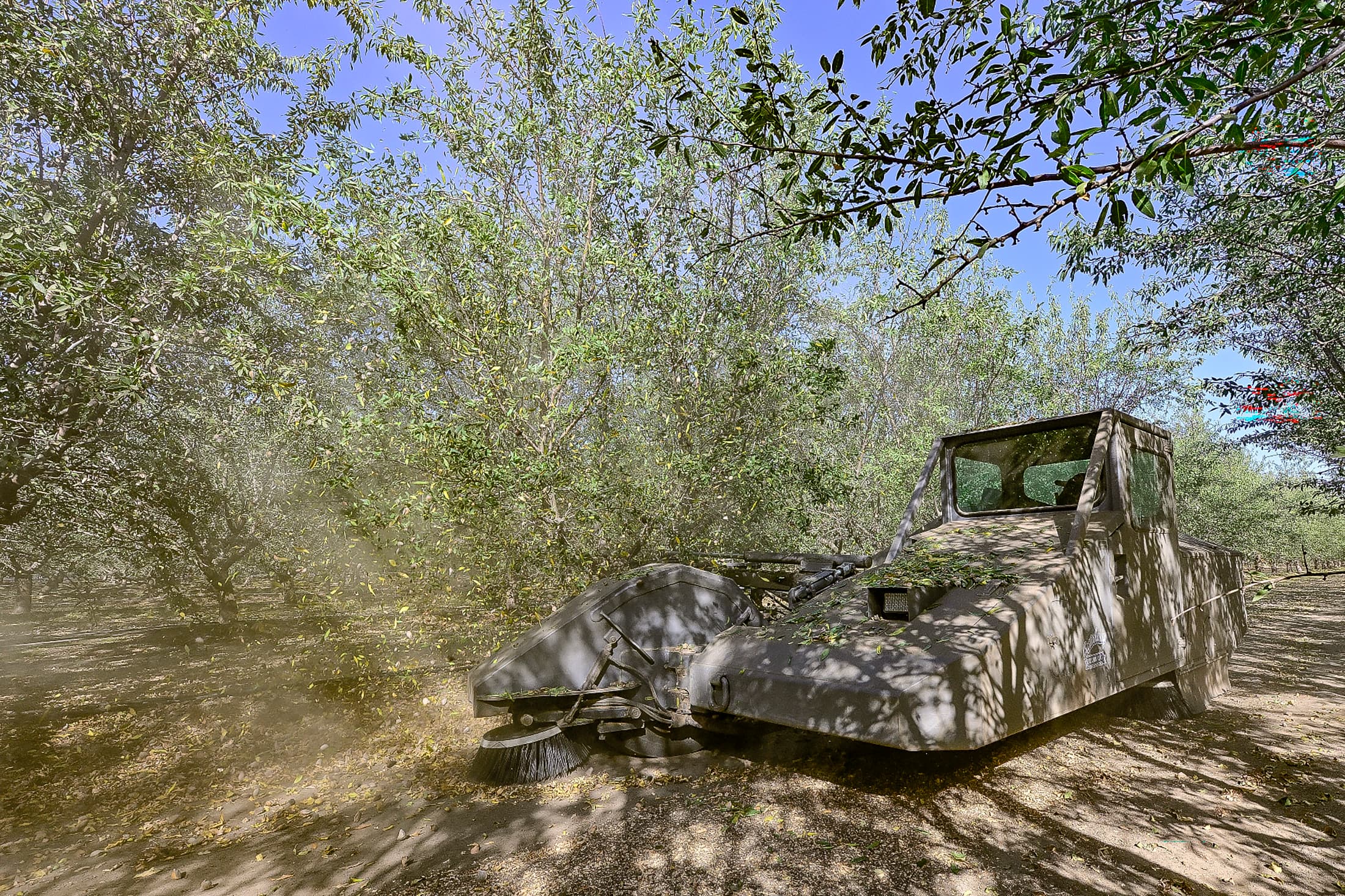
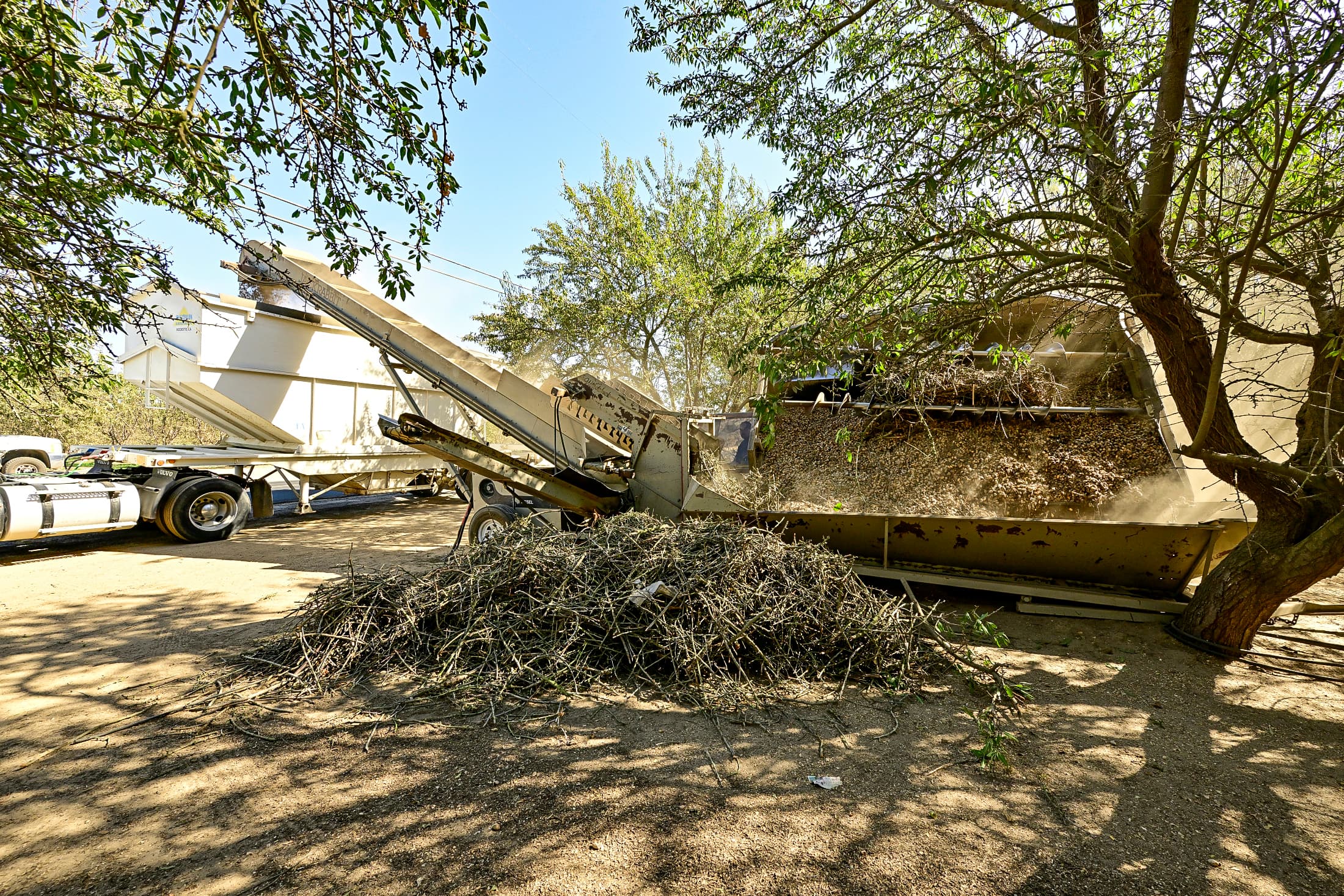
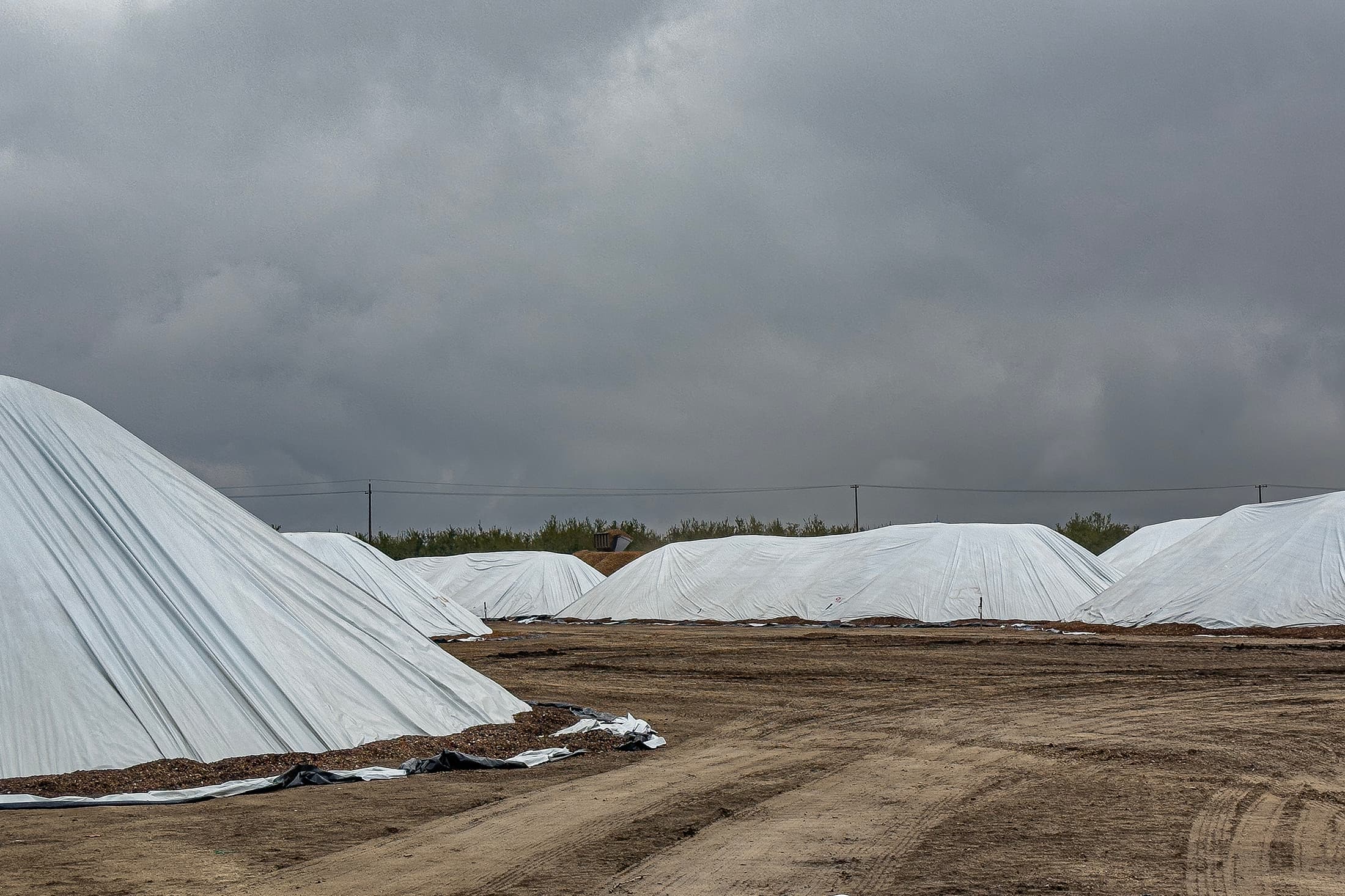
The 2026 California almond harvest is now largely complete. The combination of an early start, reduced crop volume, optimal weather, and compressed maturity provided for a fast-paced harvest. Observers have noted that growers were working to bring in the last delayed plantings of late maturing Monterey and Fritz varieties as this report was being prepared, with several growers having their harvest further delayed by the localized thunderstorms. As deliveries from the orchards declined, huller/sheller operations have turned to previously harvested stockpiles, and at the end of October, only those with stockpiled product are still working. Most are saying that they will complete operations before the Thanksgiving holiday, with larger operations working to finish their work by mid-December.
Crop receipts show small kernel sizes across all varieties, and lower moisture content versus 2025, all putting downward pressure on kernel weight, and ultimately crop potential. Nonpareil and Independence yields vary by region and reflect a weaker Nonpareil and stronger Independence crop. Pollinizer yields have come in lower than expected, driven largely by weak performance in Butte/Padre and California varieties. These factors are signaling a crop potential between 2.56 and 2.62 billion pounds, with a midpoint of 2.59 billion pounds.
While reject levels have generally been the lowest in several years, there have been exceptions. Growers with the self-fertile Independence variety continue to experience excessive levels of brown spot caused by plant bugs. And losses caused by navel orangeworm in susceptible varieties did increase during the harvest with the emergence of the third flight of the year. Over the coming months, growers will review the details of the 2026 crop, focusing on pest management. Orchard sanitation (the removal and destruction of mummy nuts remaining in the trees to reduce over-wintering navel orangeworm) will be conducted once the winter rains have begun.
As noted in previous reports, growers have quickly moved on to post-harvest tasks as they completed their harvest.
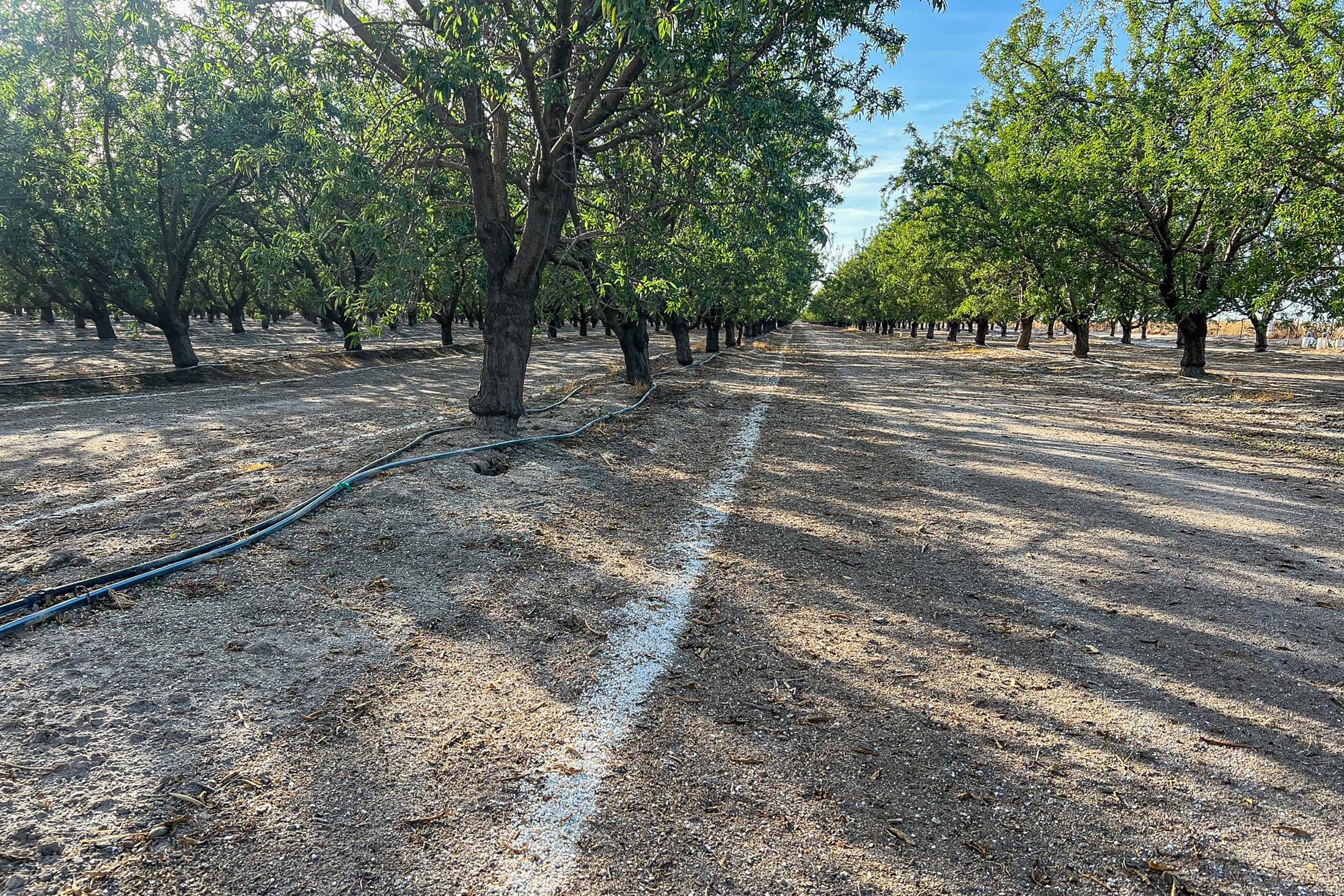
- Observers have noted applications of soil amendments and potassium fertilizer materials, which have long-term paybacks. In many cases applications of these materials have been curtailed for several years as growers worked to cut costs. Growers have also been applying foliar nutrient sprays in orchards with healthy canopies.
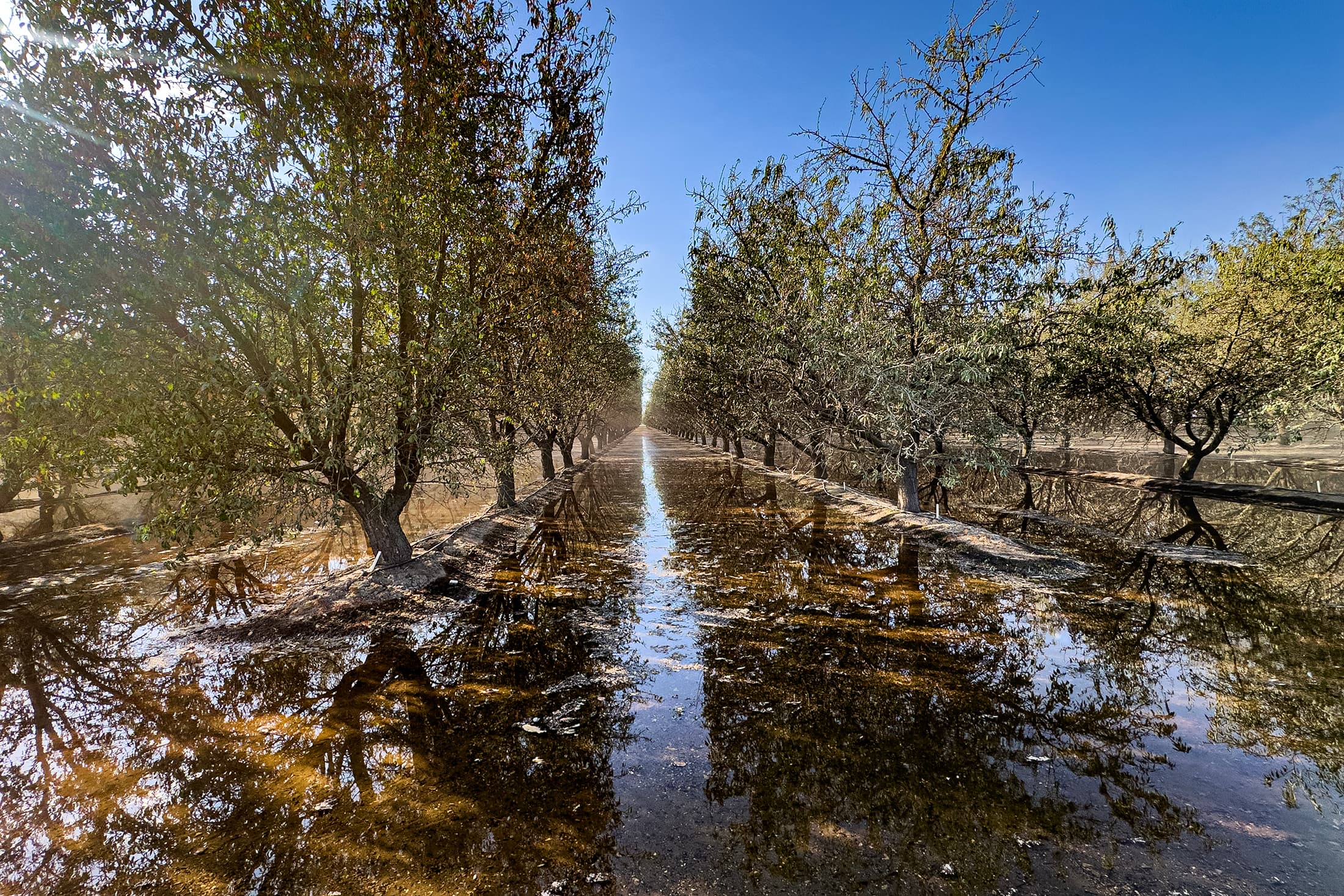
- Irrigation districts have reached the end of their delivery season and growers have been working to complete their final irrigation of the year. As shown in the photo accompanying this report, growers with flood irrigation systems remaining in the orchard from prior crops may opt to utilize the old systems to fill the orchard root zone more effectively and economically, rather than through the normal drip or micro-sprinkler systems.
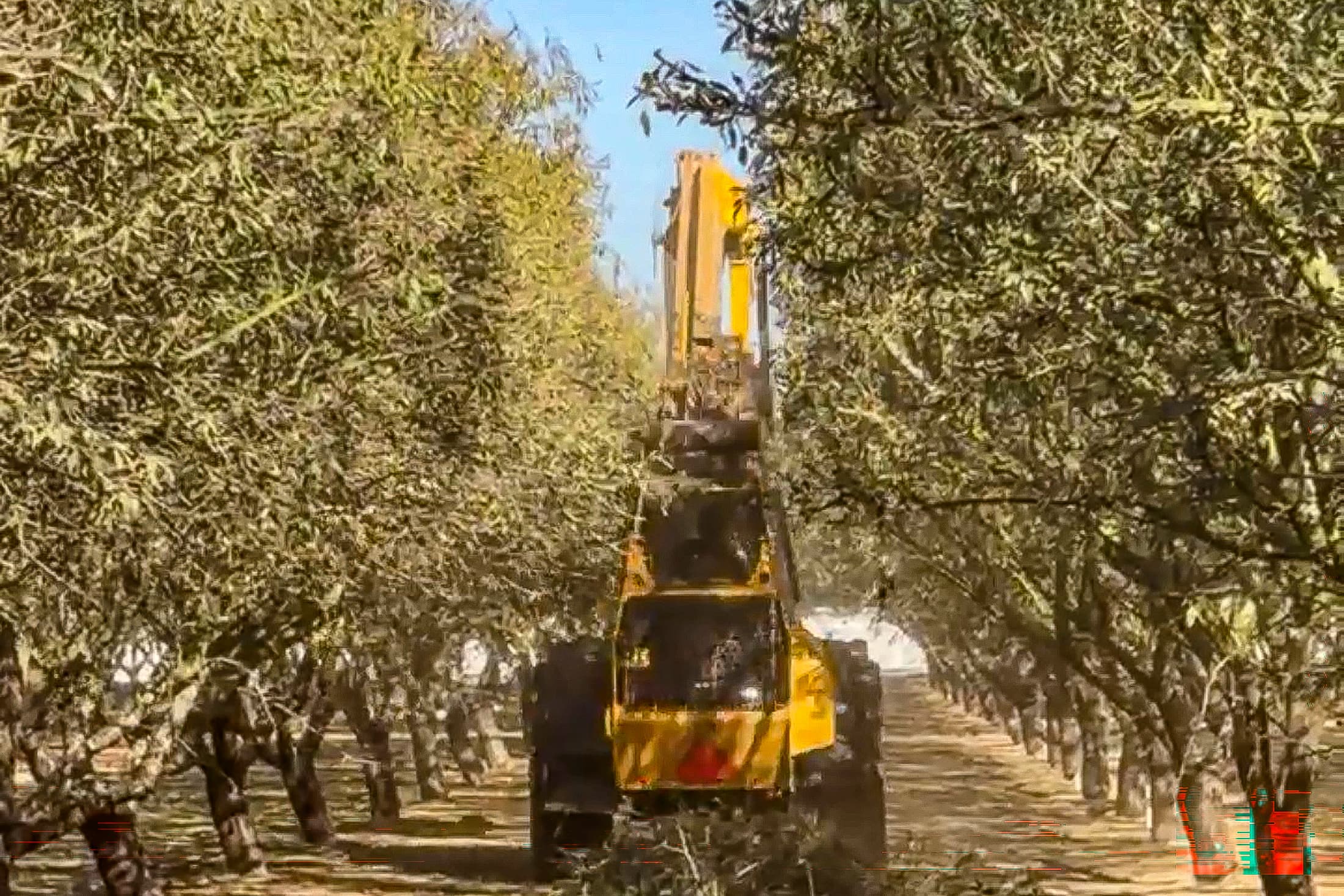
- Growers have begun pruning in younger plantings needing additional structural training. Pruning in mature plantings is generally limited to therapeutic needs: the removal of dead and/or broken branches. Growers with dense upper canopies may opt to mechanically hedge to provide light deeper into the canopy.
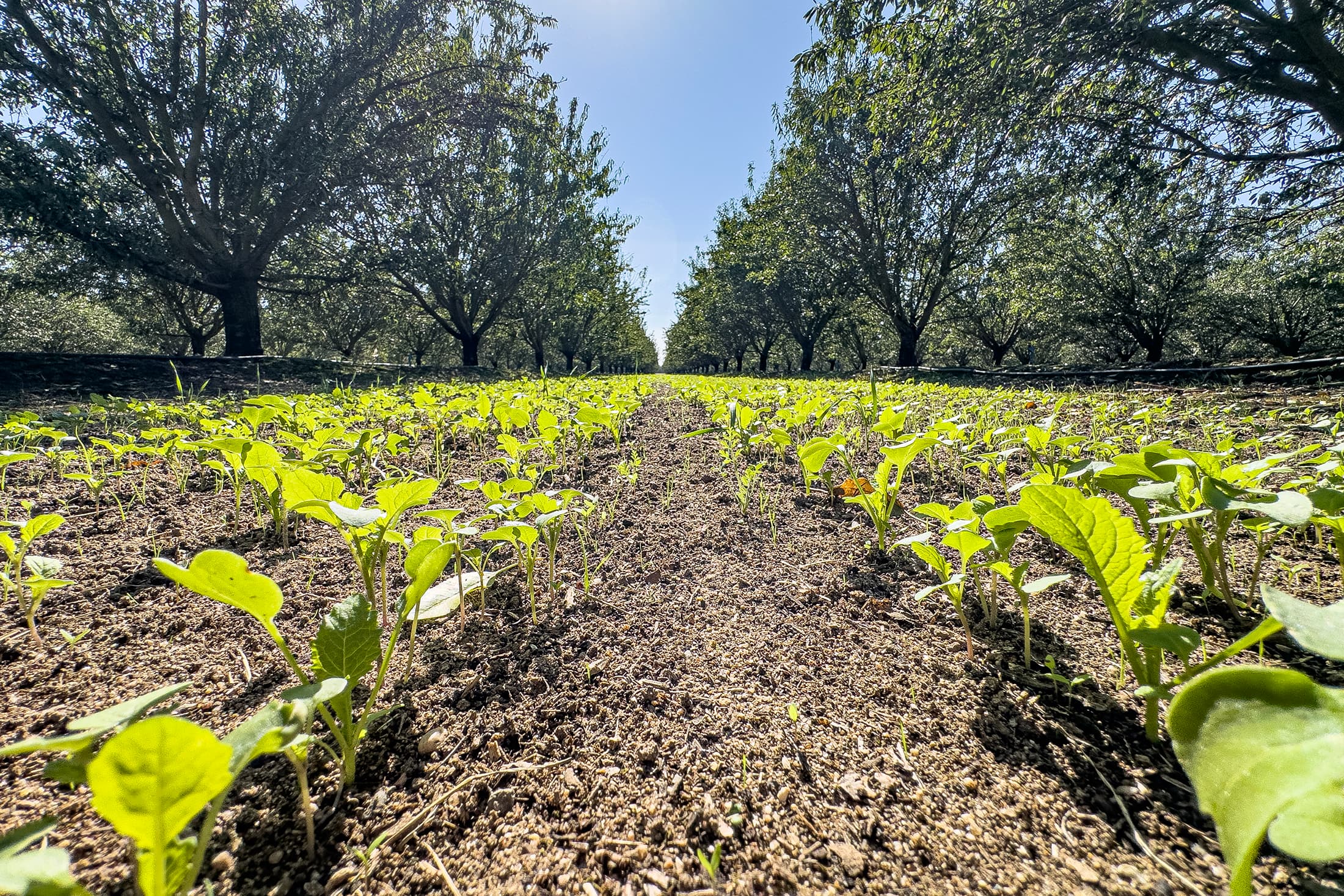
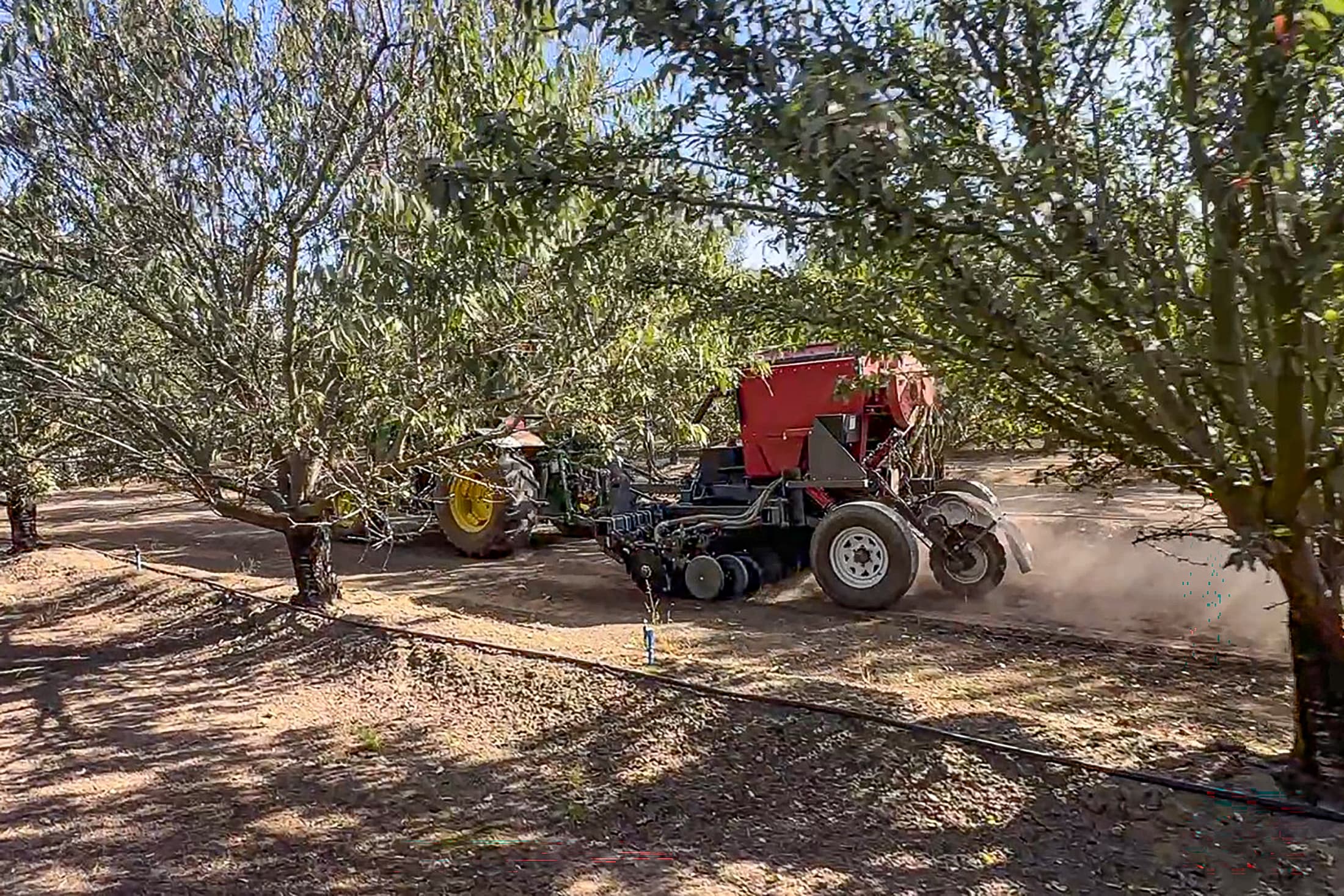
- Following orchard floor maintenance, growers have also begun planting cover crops using flowering species to support honey bees prior to and after the 2027 bloom. The seed mixes utilized also incorporate deep rooted species that can enhance water penetration into the soil. One additional benefit of cover crops is that they can also increase the retention of winter rain, a critical factor in light of the forecast of an extraordinarily strong El Niño.
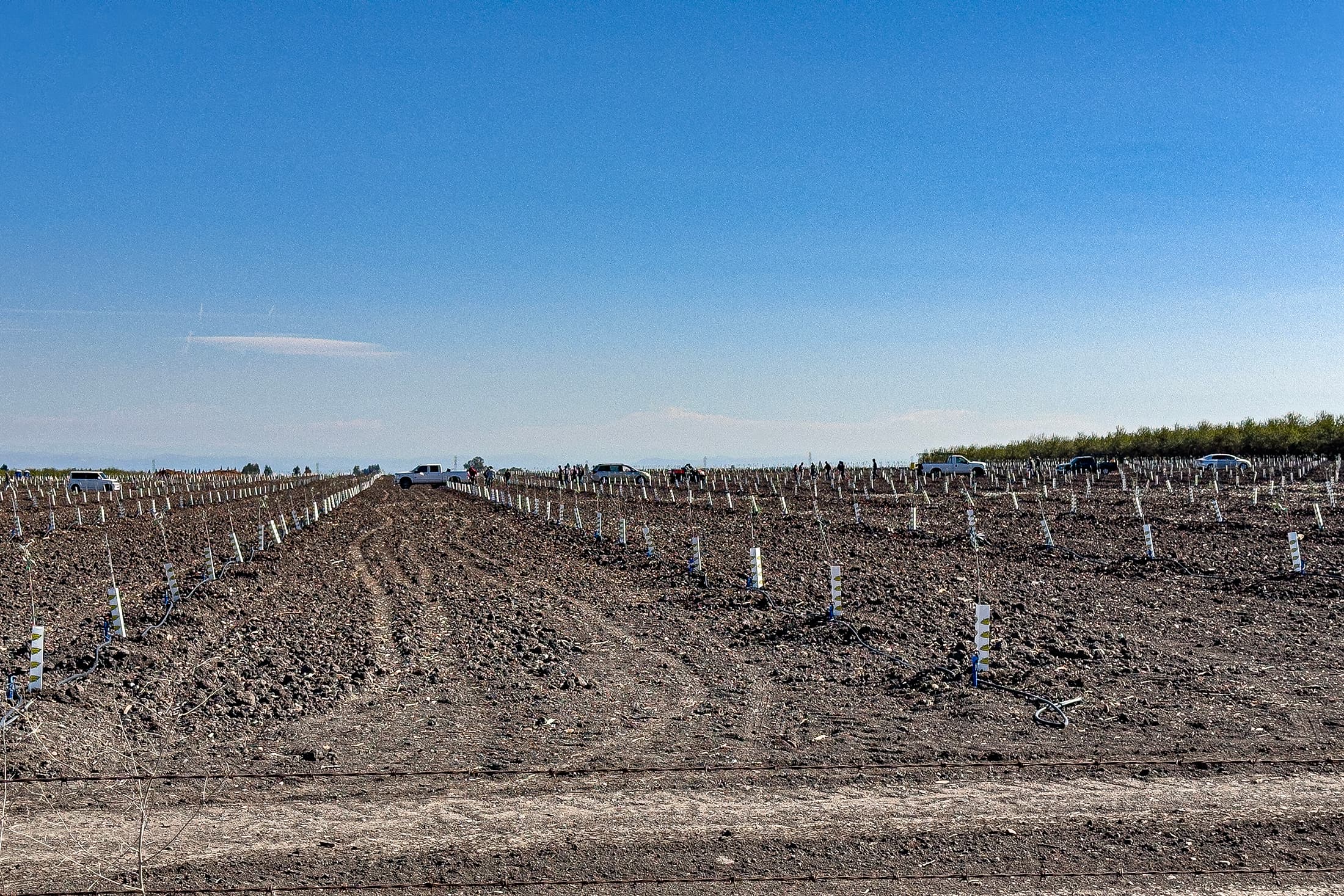
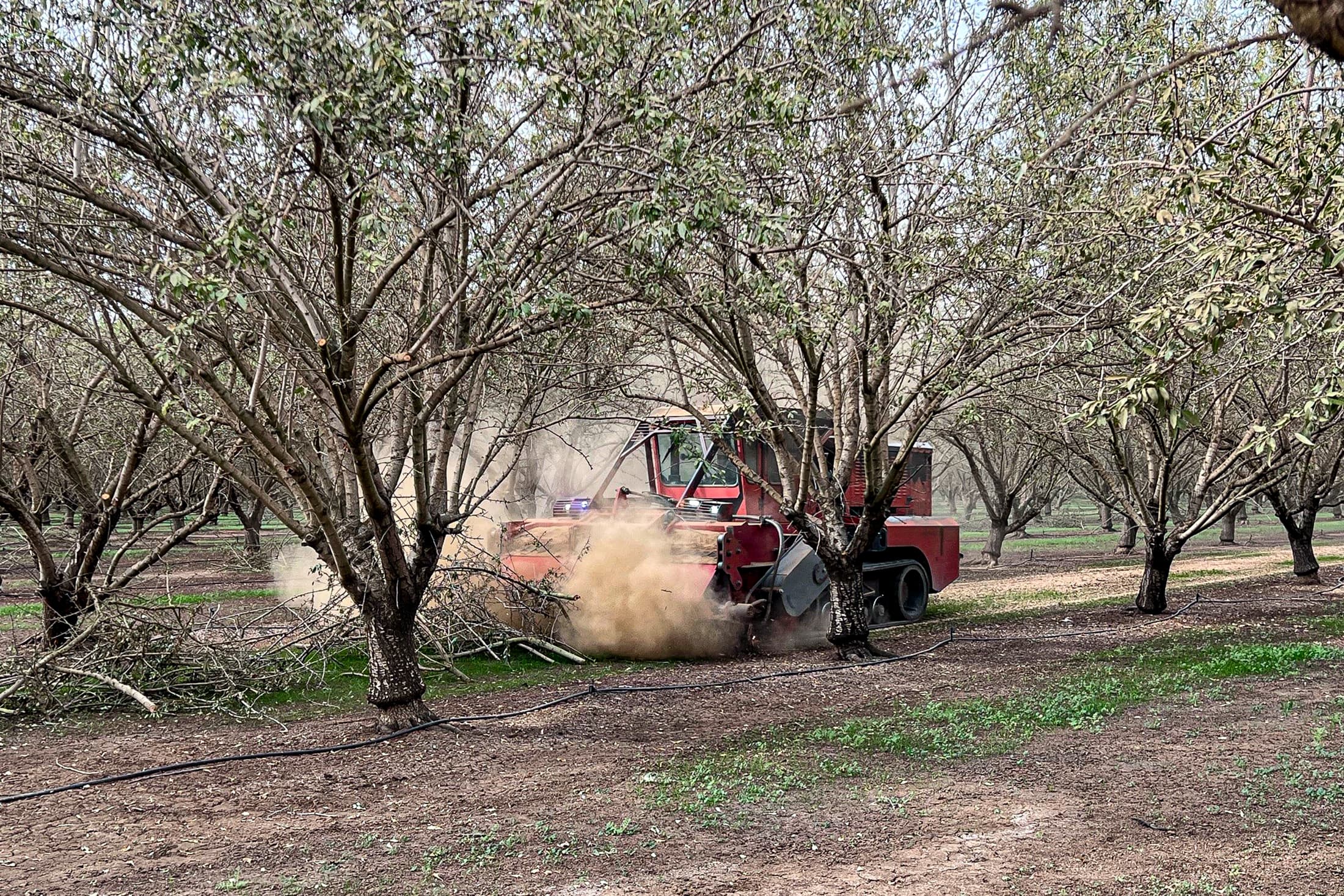
- The removal of older, low producing plantings is now a year-round activity. That said, orchard removals increase after harvest. Planting new or replacement orchards is also done throughout the year, due to the widespread adoption of potted trees versus bare-root trees that must be planted during the winter dormant period.
Growers will take the coming months to reevaluate the 2025 crop and formulate their budgets for the coming year. While market prices have been firming, rising input costs, most recently in the cost of diesel, combined with lower than anticipated yields translate into continued financial pressure.
By Mel Machado
Photo Credits: KC Clendenin and Mel Machado
Northern Conditions and Bloom Status
Current weather at the National Weather Service
Central Conditions and Bloom Status
Current weather at the National Weather Service
Southern Conditions and Bloom Status
Current weather at the National Weather Service