Crop Progress Report – June 1, 2026
This report covers the conditions and activities observed from Monday, April 27 through Sunday, May 31, 2026. The next report is scheduled for Monday, July 6, 2026. In the event of any significant occurrences prior to that date, this site will be updated as soon as possible.
California’s Central Valley experienced highly variable weather conditions during May, with wide temperature swings serving as the norm for the period, punctuated by a few days of rain.
Daily maximum temperatures ranged from the lower 60’s to nearly 100 degrees during the month, while minimum temperatures exhibited more stability, ranging from the lower 40’s on the chilliest mornings to mid-50’s under “balmier” conditions. Brisk winds also blew through the orchards on several days during the month, with sustained speeds at double digit levels and gusts reaching over 20 mph. While skies were clear and dry on the majority of days, late season storms in the opening and closing days of the period brought measurable rain to much of the Central Valley. Rainfall totals were generally limited to a few hundredths of an inch. However, the final storm of the month proved more vigorous. While most areas reported receiving from .25 to .60 inch of rain, a particularly strong cell passing over Yolo County dropped over an inch of rain near the community of Davis.
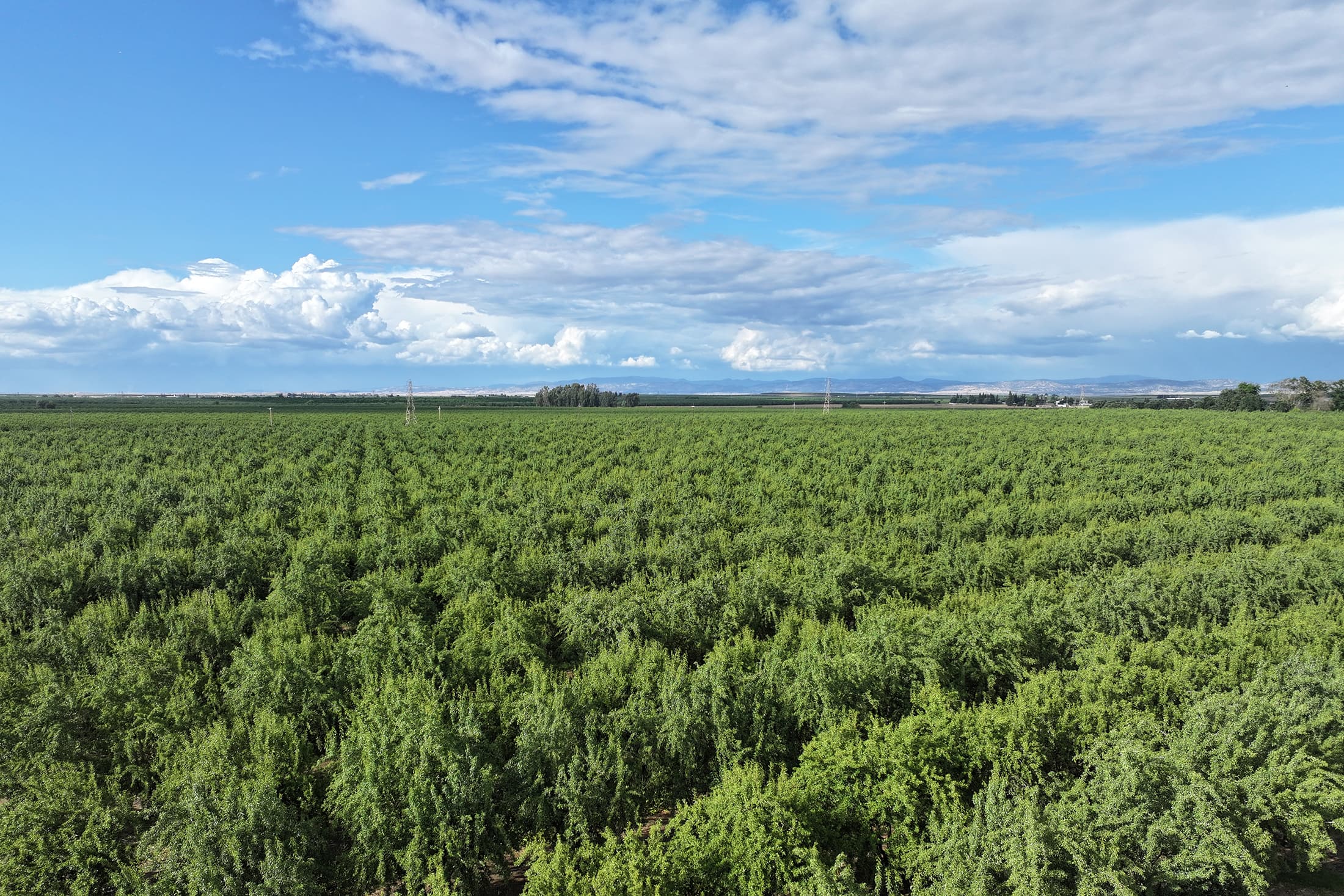
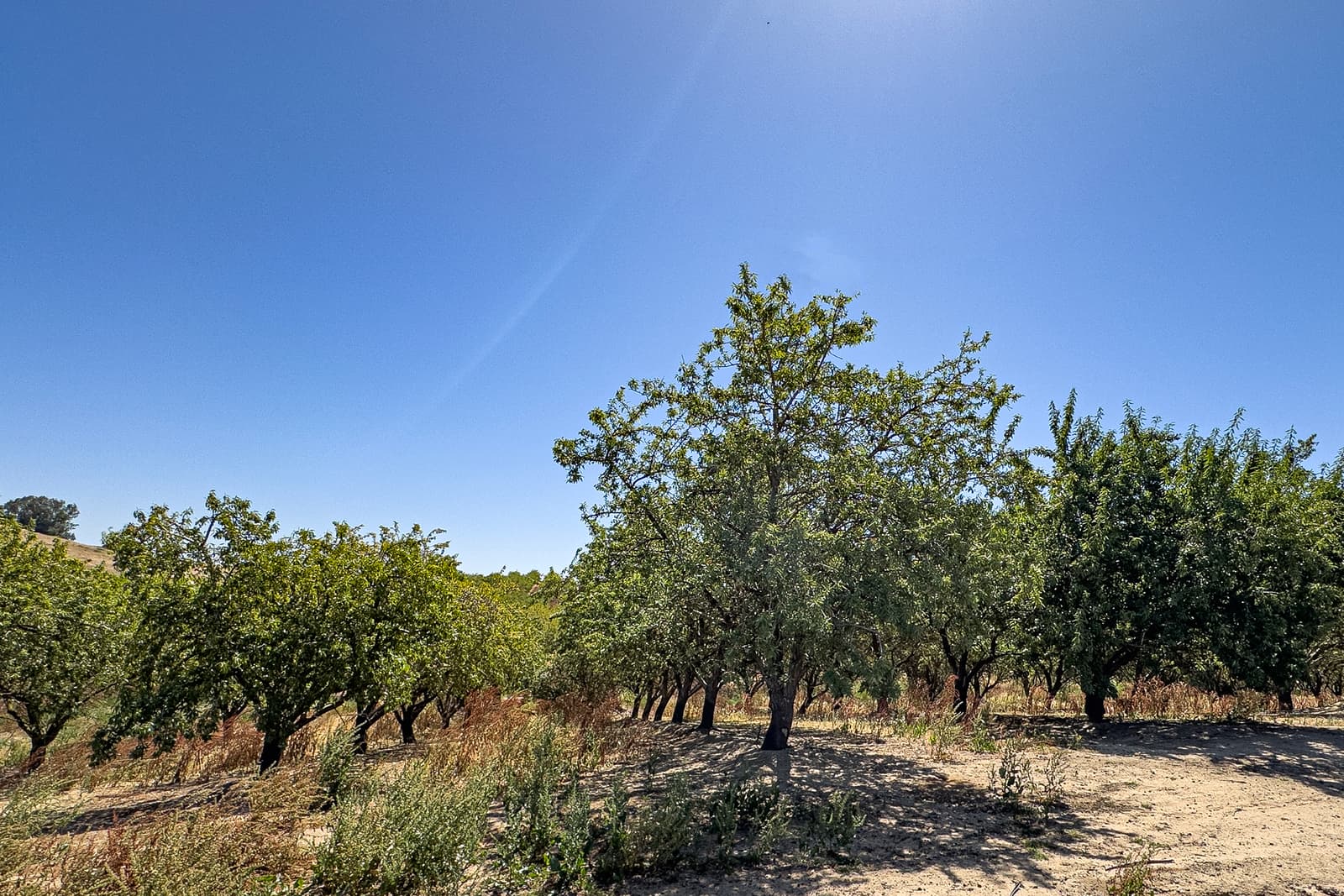
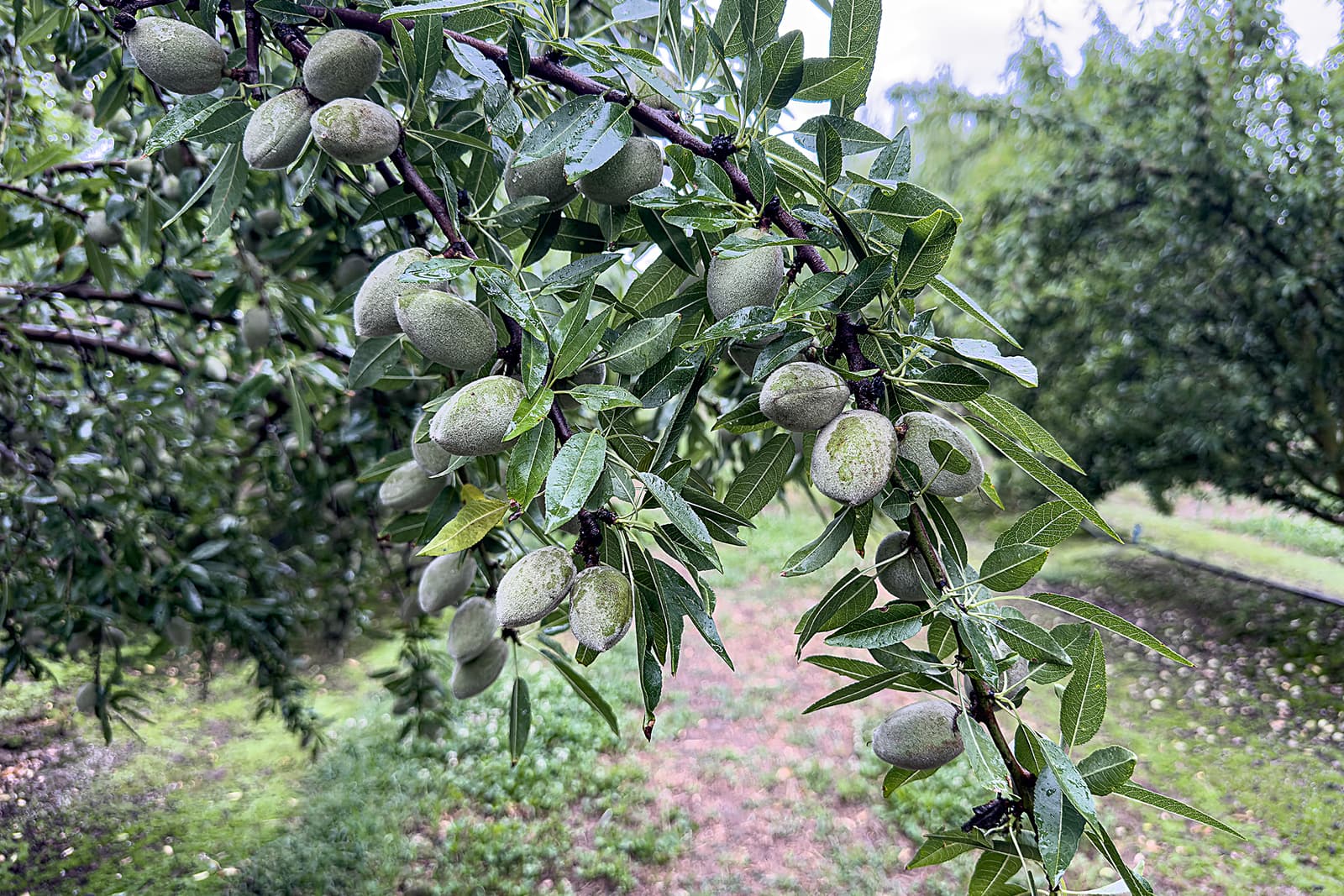
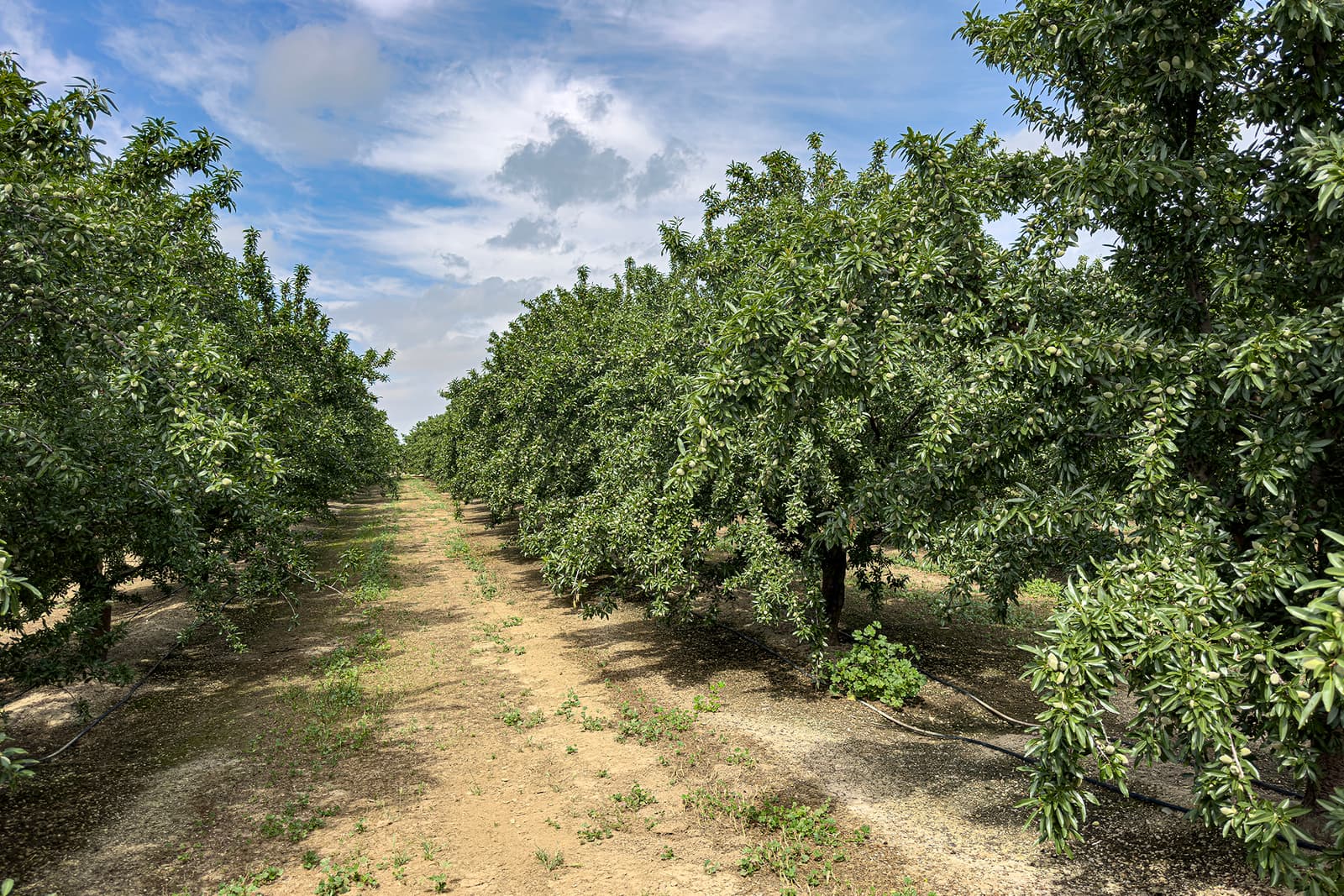
May 2026 continued the pattern of late-spring storm systems that began in April. Grower activities were largely focused on vegetation management, fertilization, and irrigation, which was offset by adequate rainfall in some cases. While the wet conditions have increased concerns for fungal infections on the foliage and developing nuts, most growers feel that they have adequate protection provided by previous treatments. The rain events have limited the expansion of web-spinning mites and observers are reporting that the orchards are in generally good condition in all areas of the valley. Areas with the strongest winds experienced some blown-over trees, broken branches, and nut loss. However, losses have been minimal.
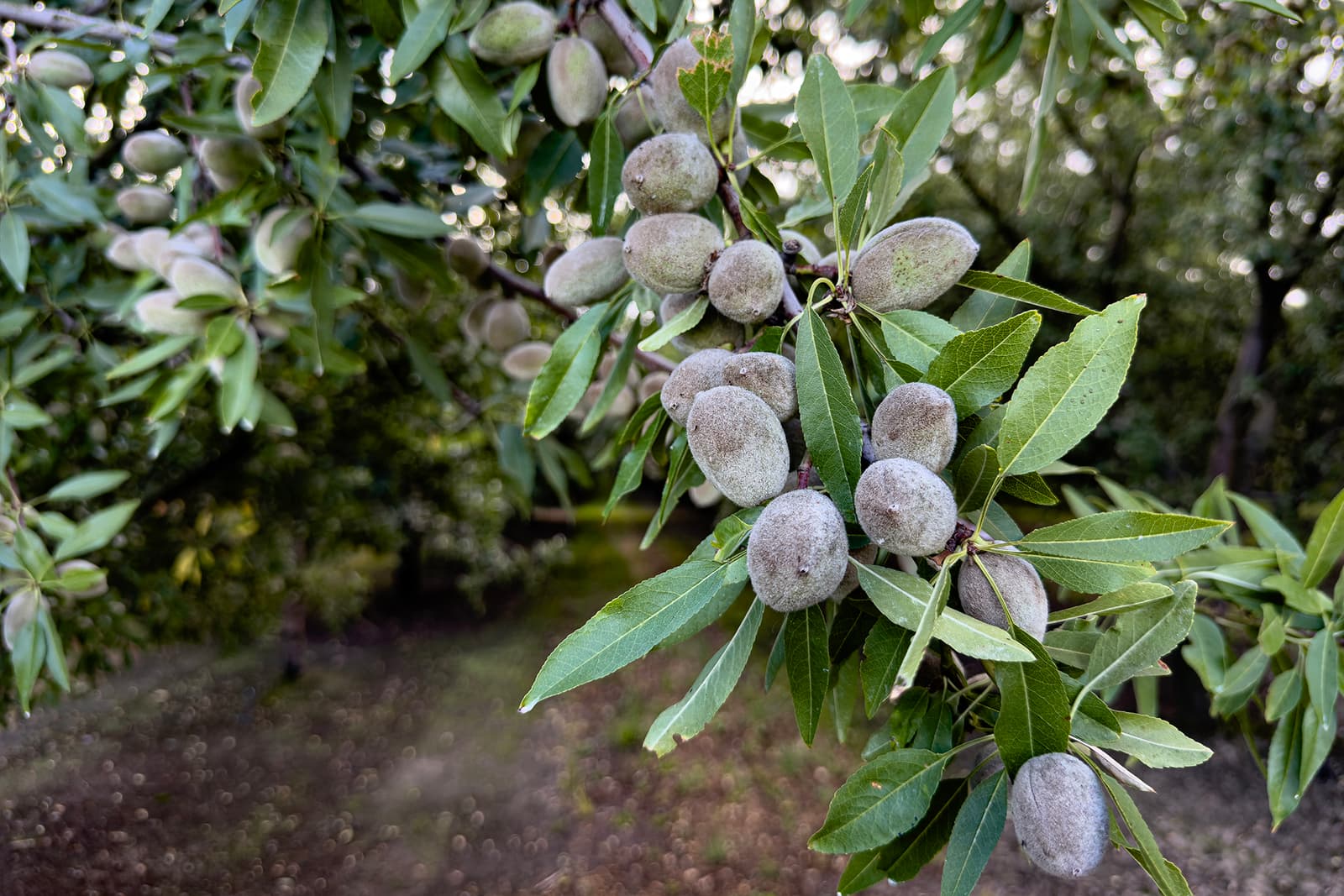
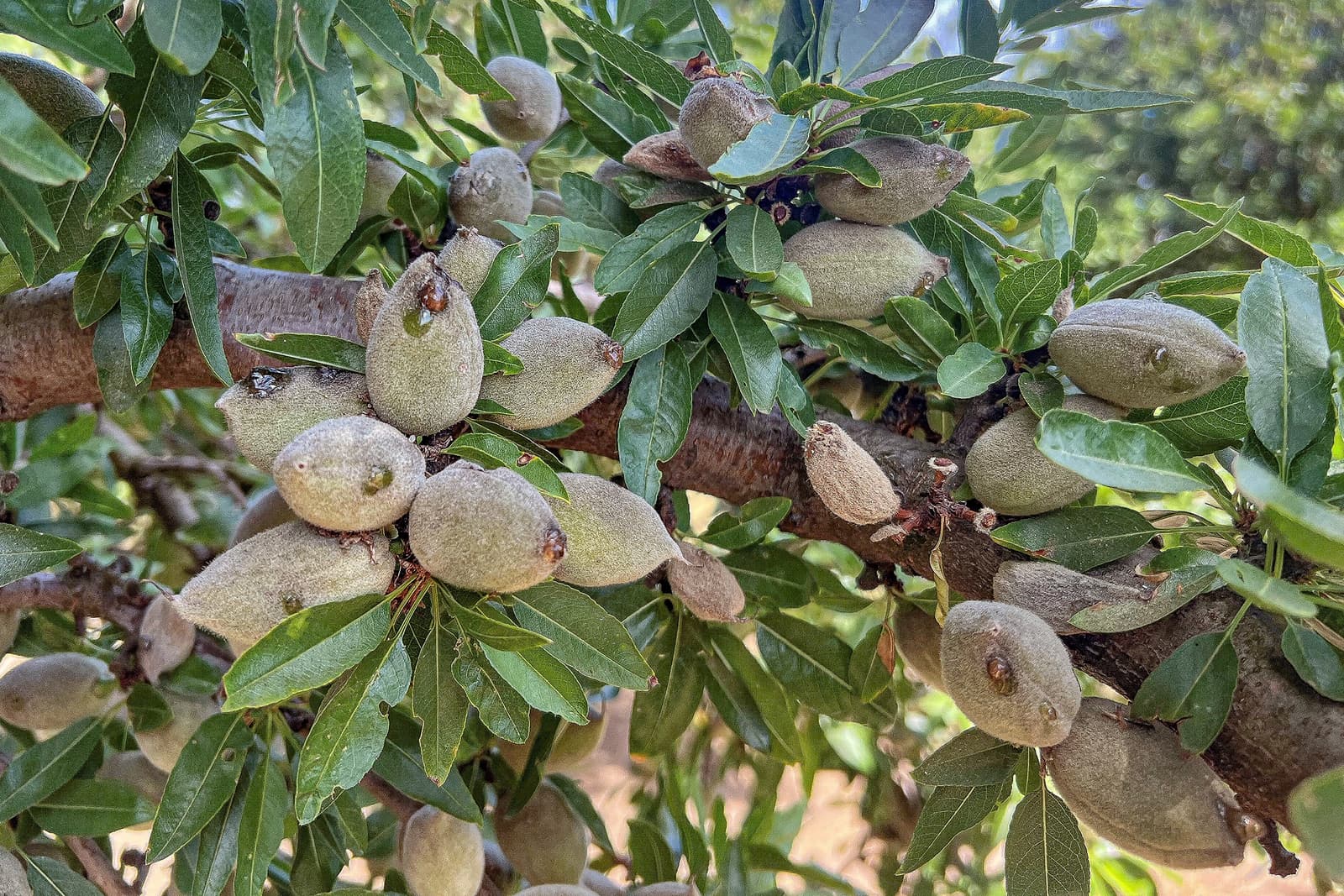
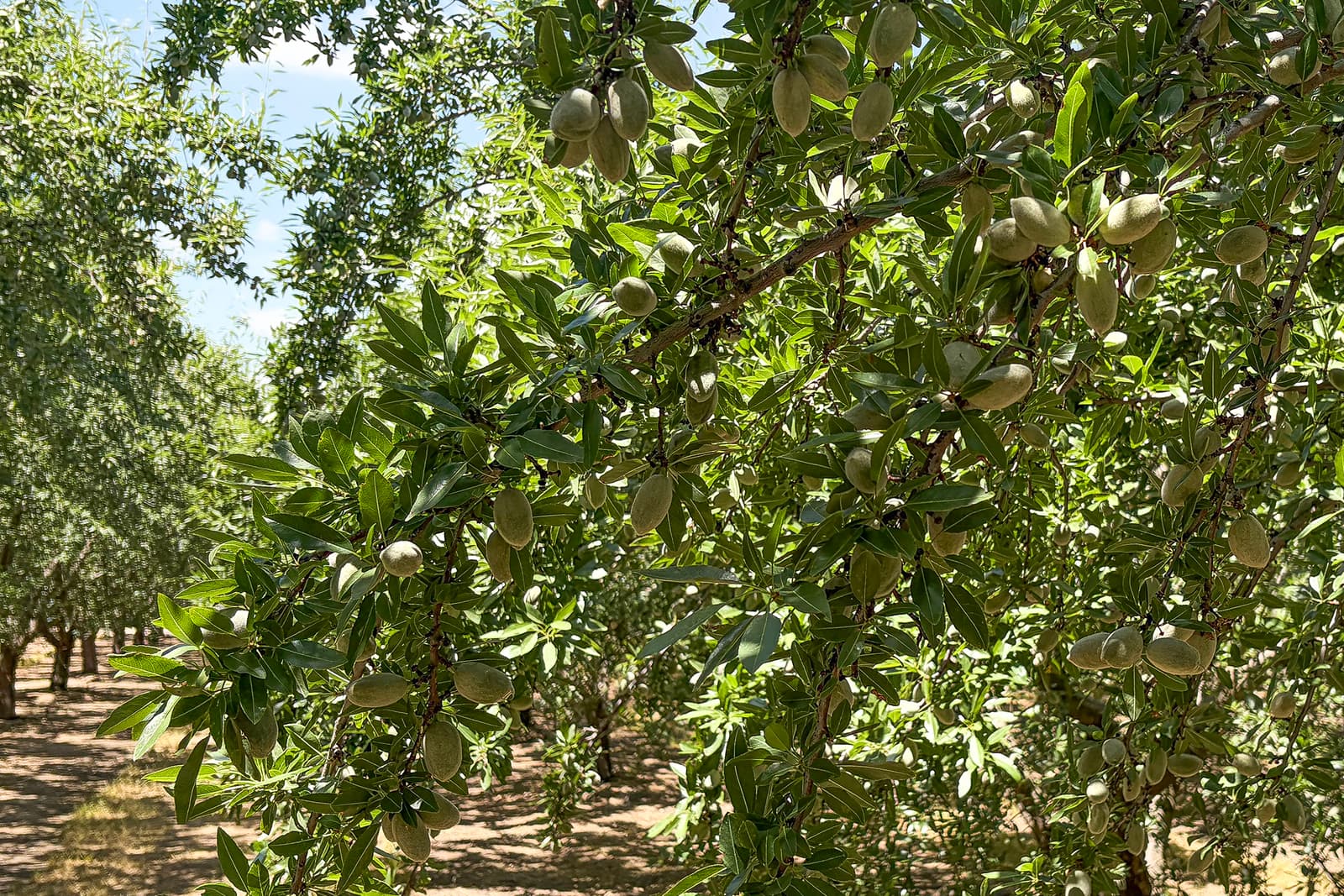
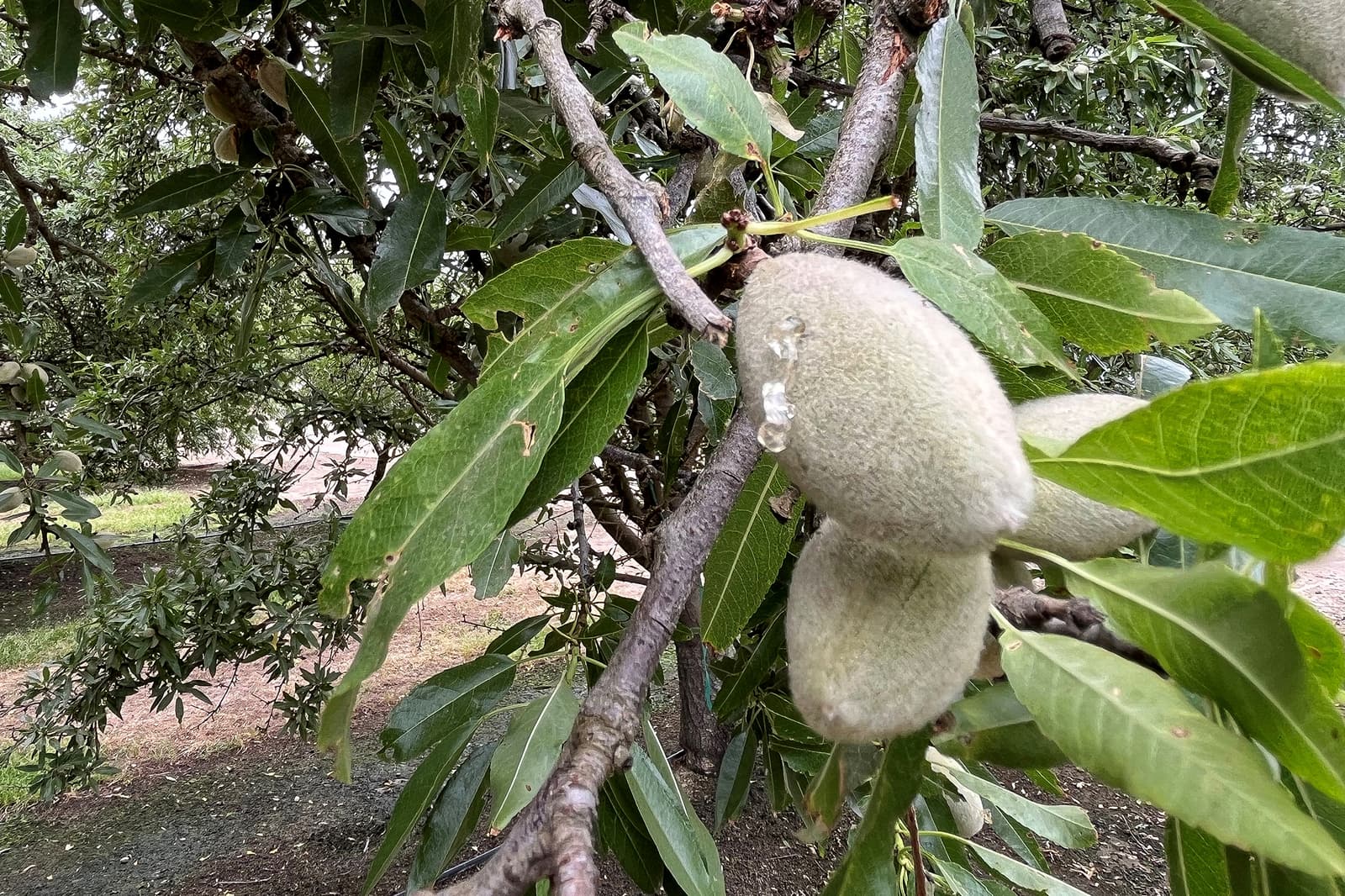
Kernels in all varieties became fully solidified during the month, providing the first confirmation of the crop maturity since the completion of the bloom. There is now strong solidarity that the crop is running approximately 10 days ahead of “normal” in all areas.
While June temperatures can influence exact timing, many believe the hull split will follow the current advanced timing, with the split in advanced examples of early maturing varieties expected during the week of June 21.
As May concludes, many growers were winding down applications of fertilizer materials, and mowing vegetation in the orchard middles to manage the orchard floor in advance of the upcoming harvest. Growers whose orchards have high populations of almond feeding ants have begun the earliest treatments using bait formulations to target them. Some of these materials require several weeks to effectively reduce the ant populations and need to be applied as much as eight weeks prior to harvest.
Growers and their pest control advisers, (PCAs), have been monitoring orchards for signs of leaffooted plant bugs and stink bugs. Brown spot, the damage resulting from the feeding of these insects on the developing nuts has been increasing for several years. Pheromones have been developed and are being tested in orchards to combat leaffooted plant bugs as PCAs work with university researchers to develop protocols for implementation. Growers have treated increasing populations of these insects where warranted.
Growers have also begun preparations for hull split treatments to control navel orangeworm (NOW). In anticipation of the advanced timing this year, growers are shifting their attention to spotting the discoloration and splitting of blank nuts at the top of the orchard canopy and along the tree rows at the edge of the orchards. These blanks (nuts that formed a hull and shell but were not fertilized during the bloom and have no kernel) split approximately ten days ahead of the sound nuts that contain almond kernels. These serve as a signal of the approaching hull split. By monitoring the split of blank nuts, growers and their pest control advisers can fine tune treatment timing during the split to optimize control.
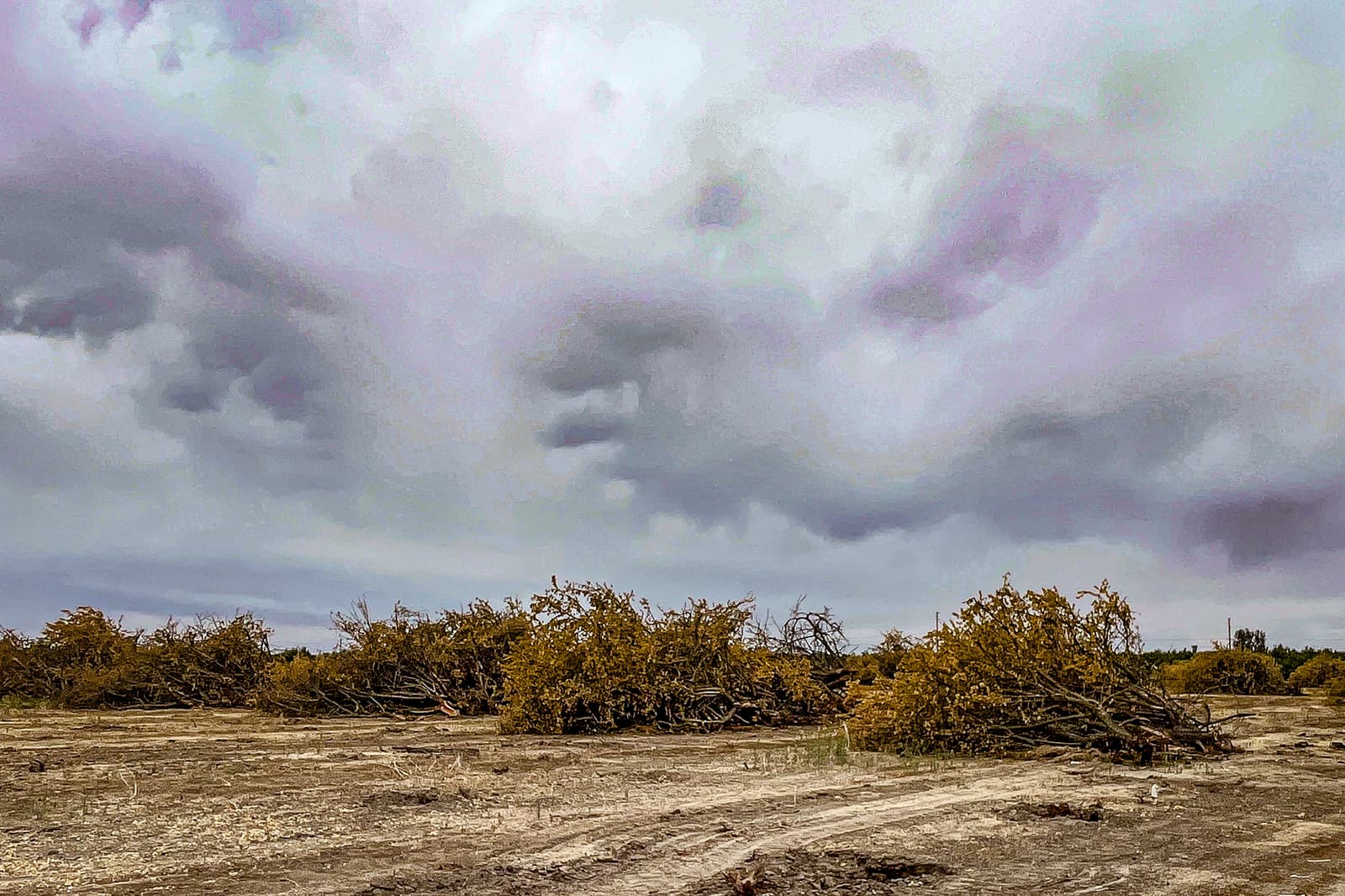
Low and minimal care orchards, as well as abandoned plantings, are present in all areas. Pest management programs have grown complicated for many growers managing plantings near abandoned/low care orchards due to adult NOW moths moving into their orchards to lay eggs on the splitting hulls. Orchard sanitation (the reduction of NOW residing within the orchards) is the foundation of NOW management. NOW adults migrating from nearby sources have created significant financial hardship and mounting frustration for growers in recent years.
By Mel Machado
Photo Credits: Austin Jackson, Anthony Scudder, KC Clendenin, Christine Ivory and Mel Machado
Northern Conditions and Bloom Status
Current weather at the National Weather Service
Central Conditions and Bloom Status
Current weather at the National Weather Service
Southern Conditions and Bloom Status
Current weather at the National Weather Service