Crop Progress Report – July 6, 2026
This report covers the conditions and activities observed from Monday, June 1, through Sunday, July 5, 2026. The next report is scheduled for Monday, August 3, 2026. In the event of any significant occurrences prior to that date, this site will be updated as soon as possible.
Warm temperatures and generally clear skies reigned over California’s Central Valley during the spring to summer transition. Daily maximum temperatures were reported predominately in the mid-80’s to mid-90’s, with highest readings reaching just over 100 degrees for a few days during the second week of the period. Windy conditions dominated during the period with speeds ranging from 15 to 20 miles per hour on many days.
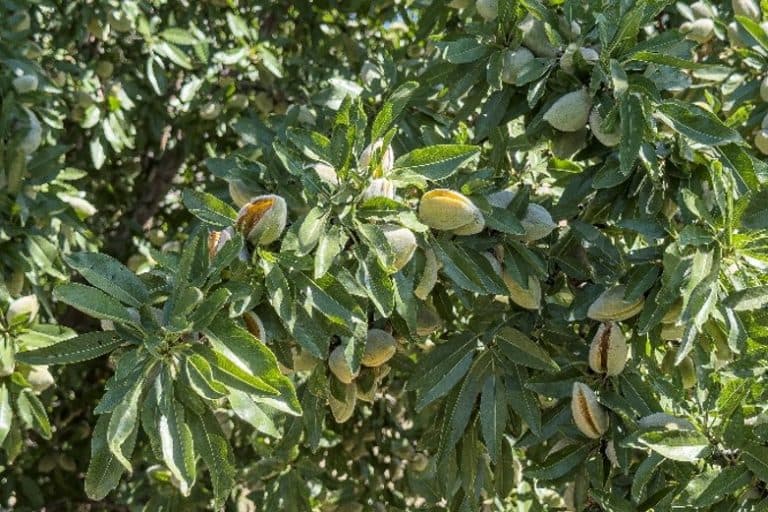
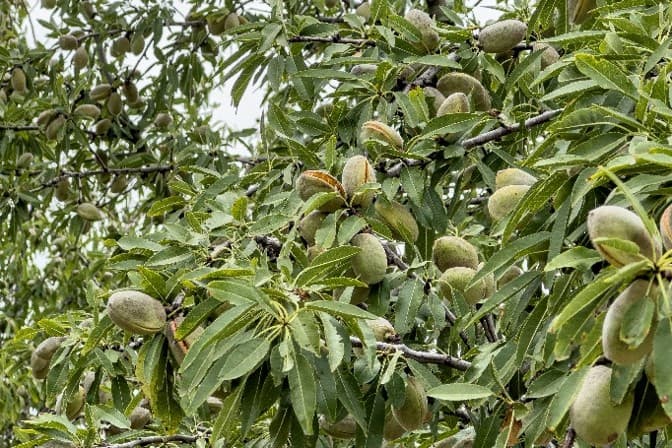
Orchard activities during June focused on preparations for the rapidly approaching harvest. As noted in previous reports, crop maturity has been running approximately ten days ahead of “normal” in all areas. Accordingly, the first signs of hull split were noted on early maturing Nonpareil and Independence varieties in mid-June. As the split has progressed, growers began hull split treatments to control navel orangeworm during the week of June 21, and initial treatments have been completed as this report is being published. While web-spinning spider mites have not presented significant challenges this year, those with increasing mite and stink bug populations have included materials to reduce losses from these pests as well.
Fertilizer applications have largely been completed, but irrigations continue. The comparatively mild temperatures experienced thus far this year have generally allowed growers to keep up with their orchards’ water requirements. As the hull split progresses, many will work to limit irrigation to one half of the orchard’s consumptive use for approximately two weeks to reduce fungal infections on the splitting hulls. The practice of “Regulated Deficit Irrigation” was developed by University of California researchers to reduce hull rot. While hull rot poses no concern for the hulls themselves, the infections produce toxins that kill fruiting wood, potentially impacting subsequent crops. Applications of ant bait formulations targeting species that can damage almonds while on the ground have also been conducted, timed between irrigations for greatest efficacy.
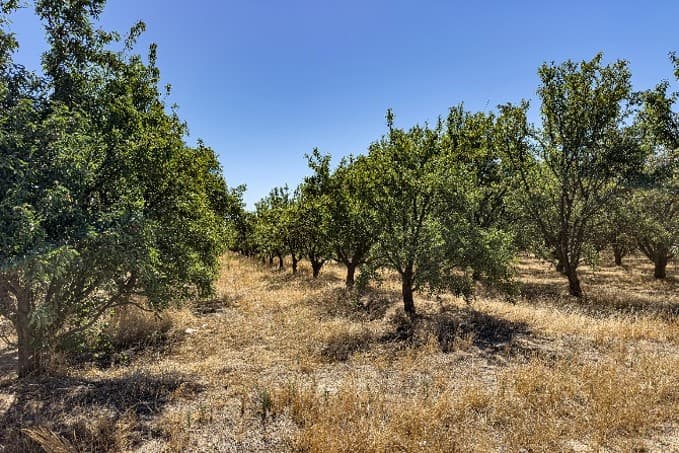
Efforts to prepare the orchard floor have also come into focus. Rising fuel costs have inspired many to limit the number of machinery passes in an effort to control costs. Now that the harvest is drawing near, eliminating the vegetation on the orchard floor takes on greater importance. While the orchard middles, the area between the tree rows, are mowed, the area directly beneath the tree row (strip) can pose a greater challenge as mowers cannot be used. Decisions earlier in the year regarding weed control within the strip can have significant impacts later during the harvest. Excess vegetation within the tree row prevents blowers mounted on orchard sweepers from moving crop into the orchard middles for harvesting, effectively reducing the amount crop removed from the orchard.
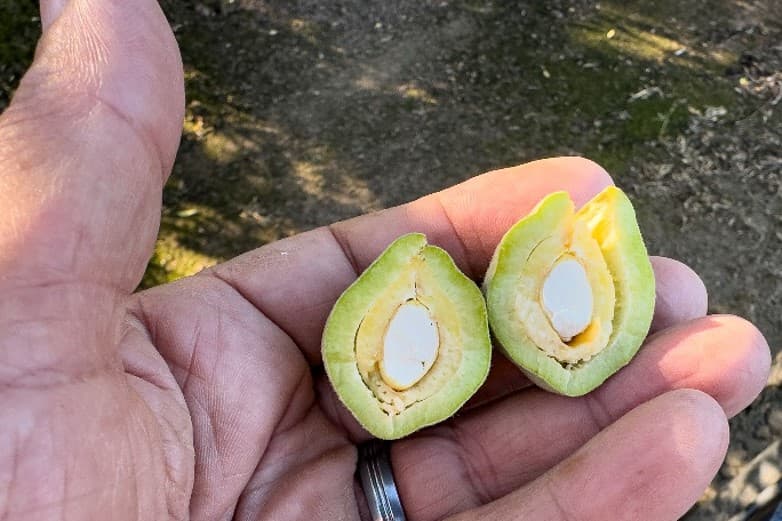
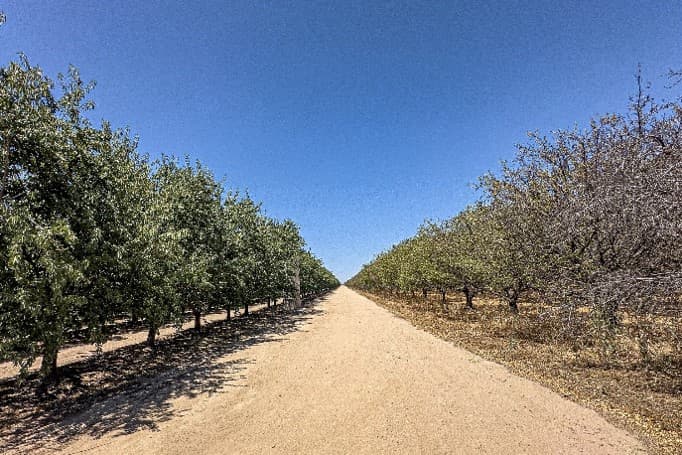
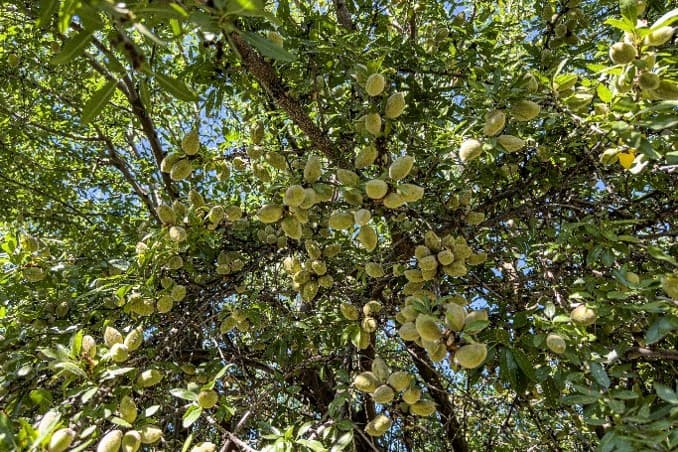
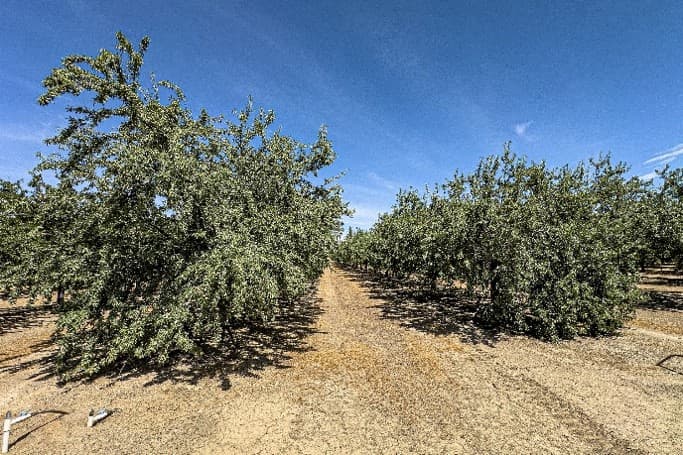
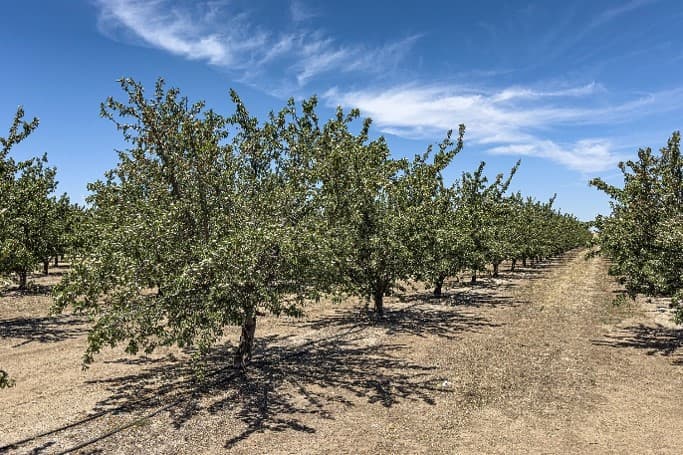
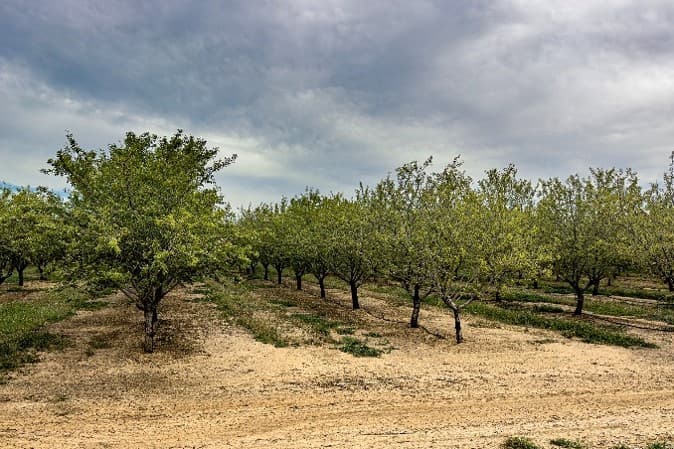
As the 2026 growing season has progressed, economic and agronomic impacts have become more apparent. As seen in the photos accompanying this report, observers in all areas are noting a wide degree of variability in orchard conditions, produced largely by variations in orchard nutritional status and crop load. Rising fertilizer, fuel and energy costs this year have increased economic pressure on all growers, forcing them to make tough decisions. Some orchards are carrying excellent crop loads with vibrant growth, while others have strong crops with no new spur development, indicating poor nutritional status. Plantings with poor crops are also easily found, no doubt reflecting the affects of poor nutritional status in prior years and/or poor pollination during the 2026 bloom. Also shown in the accompanying photo, observers are noting thick hull and shells in all areas. University of California researchers have noted that the elevated temperatures experienced in March immediately after bloom can reduce kernel size and weight. This is becoming more apparent in the visible thickness of hull and shell.
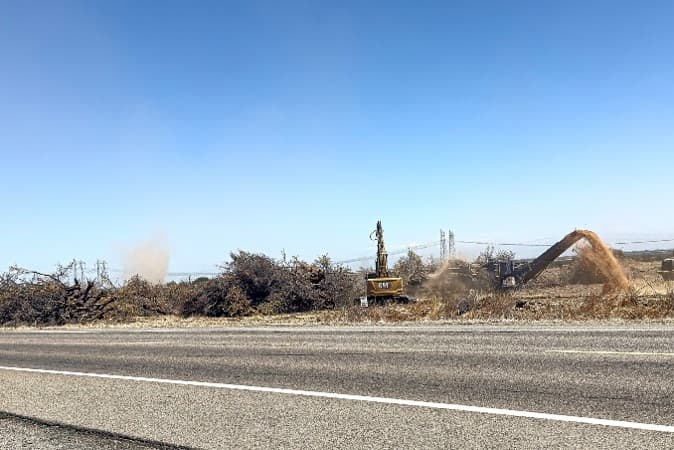
Also apparent is the number of abandoned plantings. Some are recently abandoned and are carrying crop. Others are dead, or nearly so. Those carrying crop loads serve as a navel orangeworm haven, thwarting neighboring growers pest management programs. The number of abandoned plantings, along with the low care orchards, also distorts calculations of average yield across the crop.
Observers are reporting that shaking of the earliest, stressed plantings is expected to begin in mid-July. More vibrant plantings will wait until the final week of the month.
By Mel Machado
Photo Credits: Mel Machado
Northern Conditions and Bloom Status
Current weather at the National Weather Service
Central Conditions and Bloom Status
Current weather at the National Weather Service
Southern Conditions and Bloom Status
Current weather at the National Weather Service