Crop Progress Report – January 30, 2026
This report covers the conditions and activities observed prior to the start of the 2026 bloom. We anticipate starting regular weekly bloom reports during the week of February 9, 2026.
The winter of 2025-26 has been one of extremes. Following the heavy rainfall that interrupted the 2025 harvest for many growers, the Central Valley received a few strong, but relatively warm weather systems that dropped heavy rain in mid-November and around the Christmas holiday. These storms were separated by extended periods dominated by high pressure systems, with no measurable precipitation. While the season started with above normal precipitation levels for nearly all locations, the lack of rainfall has caused all reporting stations to fall near or below normal levels for the current date.
Snowpack levels in the Sierra Nevada watershed have also been impacted. The westerly nature of the storm systems kept snow levels at high elevations. Additionally, greater snow was received in the southern Sierras, with much less snow in the north. As this report is being written, the Sierra snowpack is reported at 43% of normal in the northern region, 60% in the central and 78% in the southern Sierra.
The ample soil moisture from the November rains and dominant high-pressure systems that followed conspired to produce some of the most persistent and densest tule fog observed in many years. Most of the valley failed to see the sun for as long as three weeks during December and January, with other areas experiencing only brief periods of partially cloudy skies.
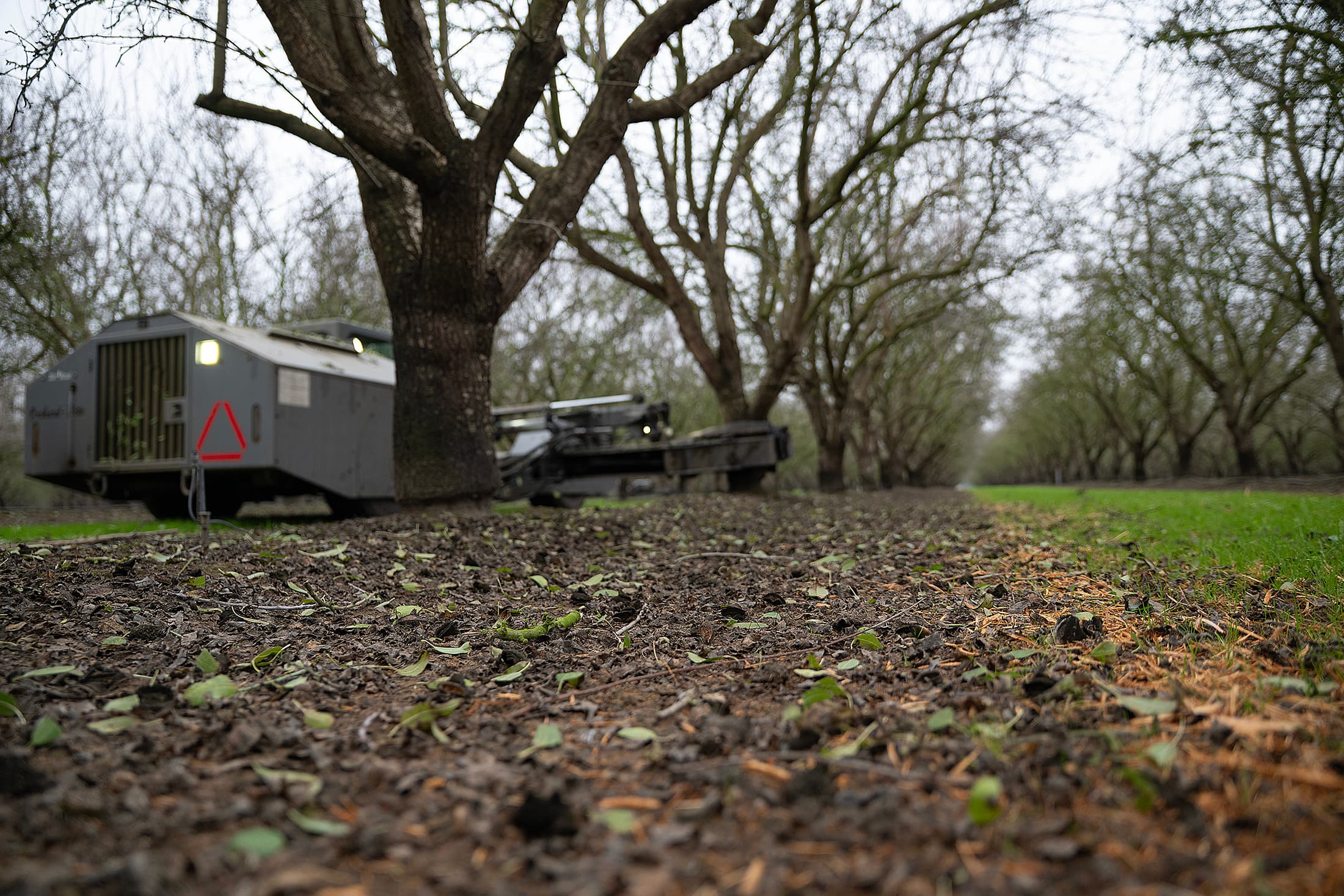
The dry conditions and ample fog have made orchard sanitation, the removal and destruction of mummy nuts, much easier this year. Mummies, the nuts that fail to drop from the trees at harvest function as over-wintering sites for navel orangeworm, one of the crop’s prime insect pests. The moisture provided by the fog softens the mummy’s attachment to the tree making it much easier to remove them. After shaking, the mummies are then swept into windrows and destroyed using flail mowers, reducing the population of navel orangeworm within the orchards, aiding in ultimate control.
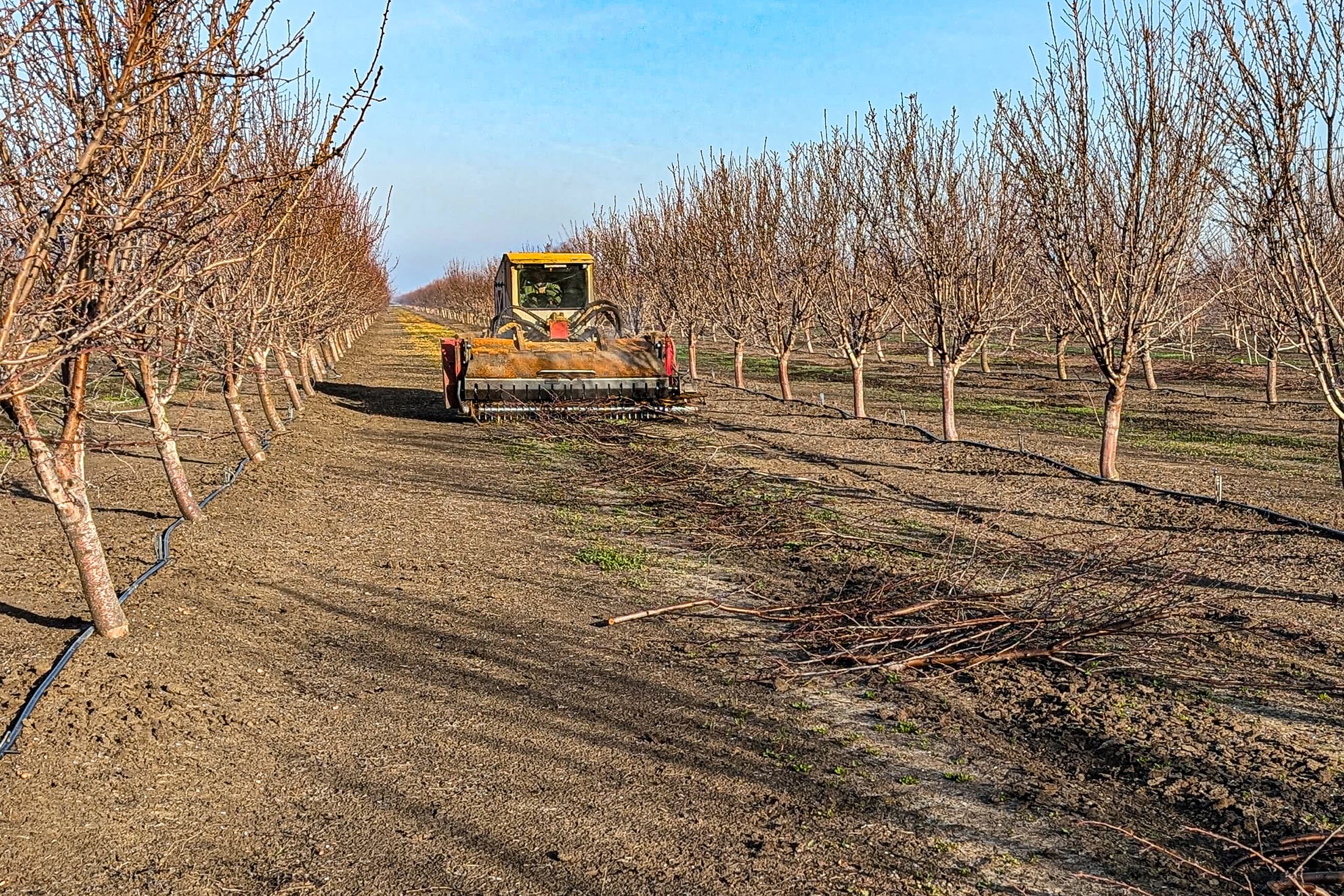
Other winter tasks include training younger orchards and therapeutic pruning on bearing orchards by selecting and removing broken branches and those that can impede the path of equipment down the row. Shredders have been able to follow the pruning crews through the orchards to grind the resulting brush, which is allowed to decompose on the orchard floor.
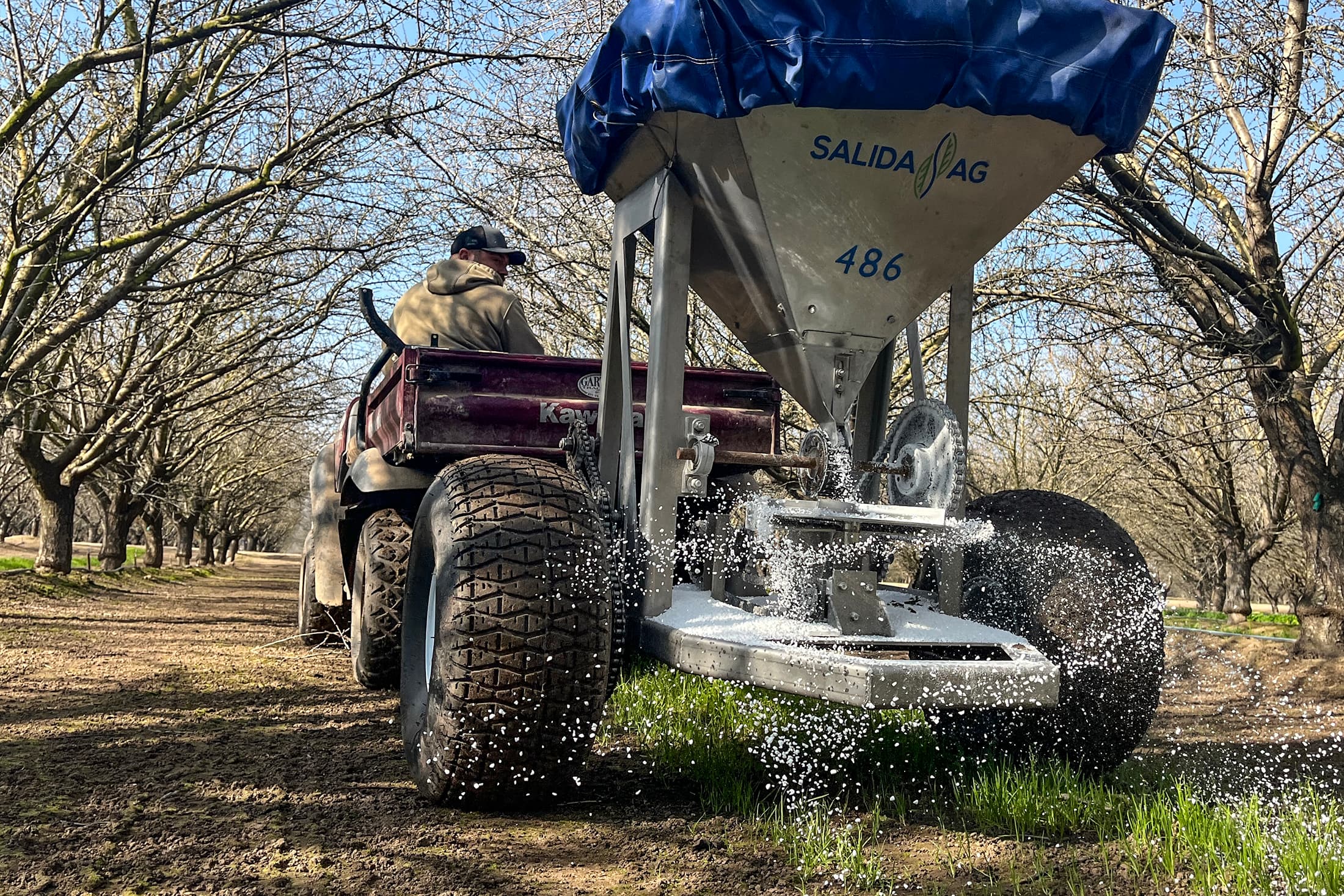
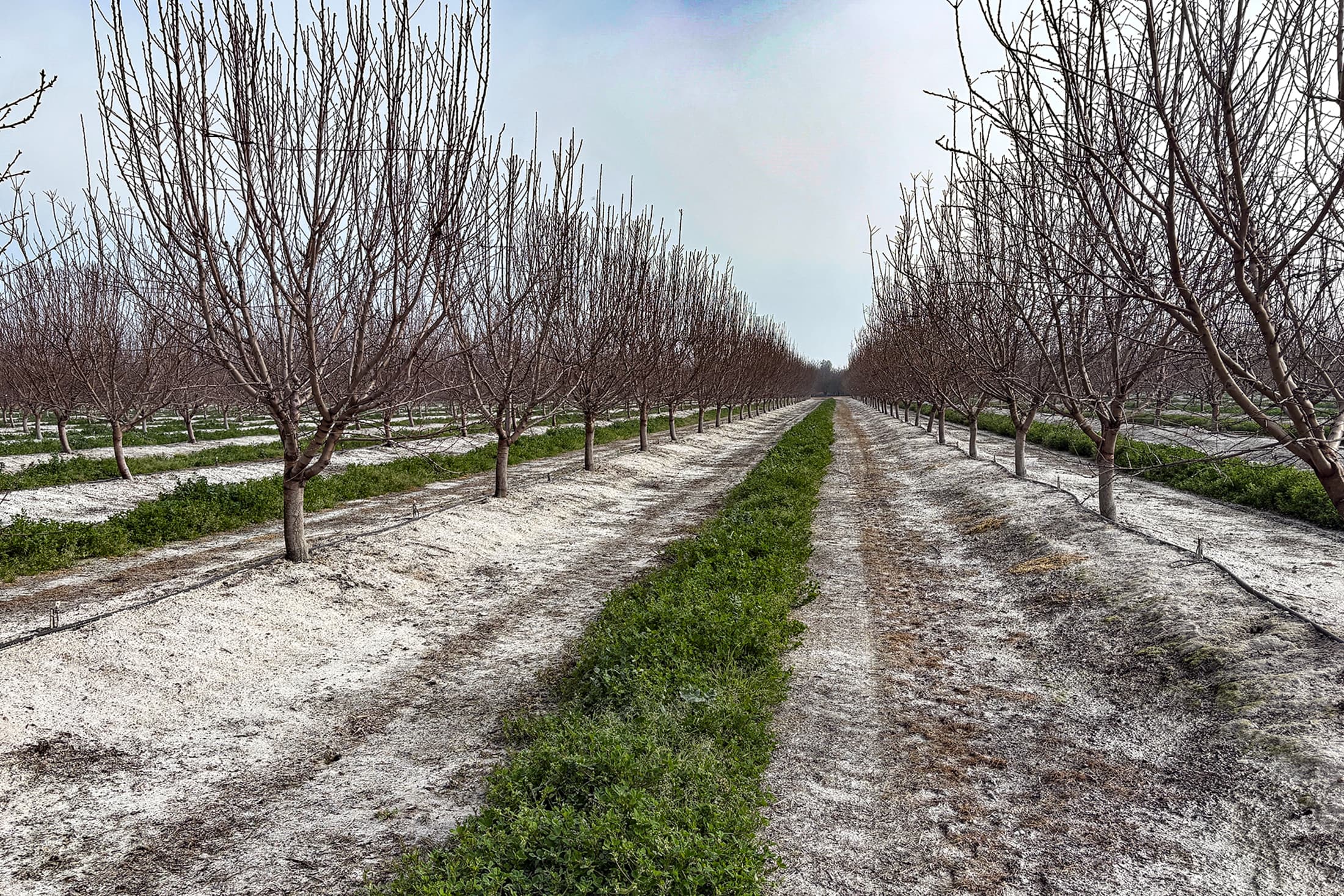
As may be seen in the photos accompanying this report, applications of soil amendments, such as gypsum or lime to mitigate soil pH issues as well as some fertilizer materials have been conducted in recent weeks ahead of the bloom.
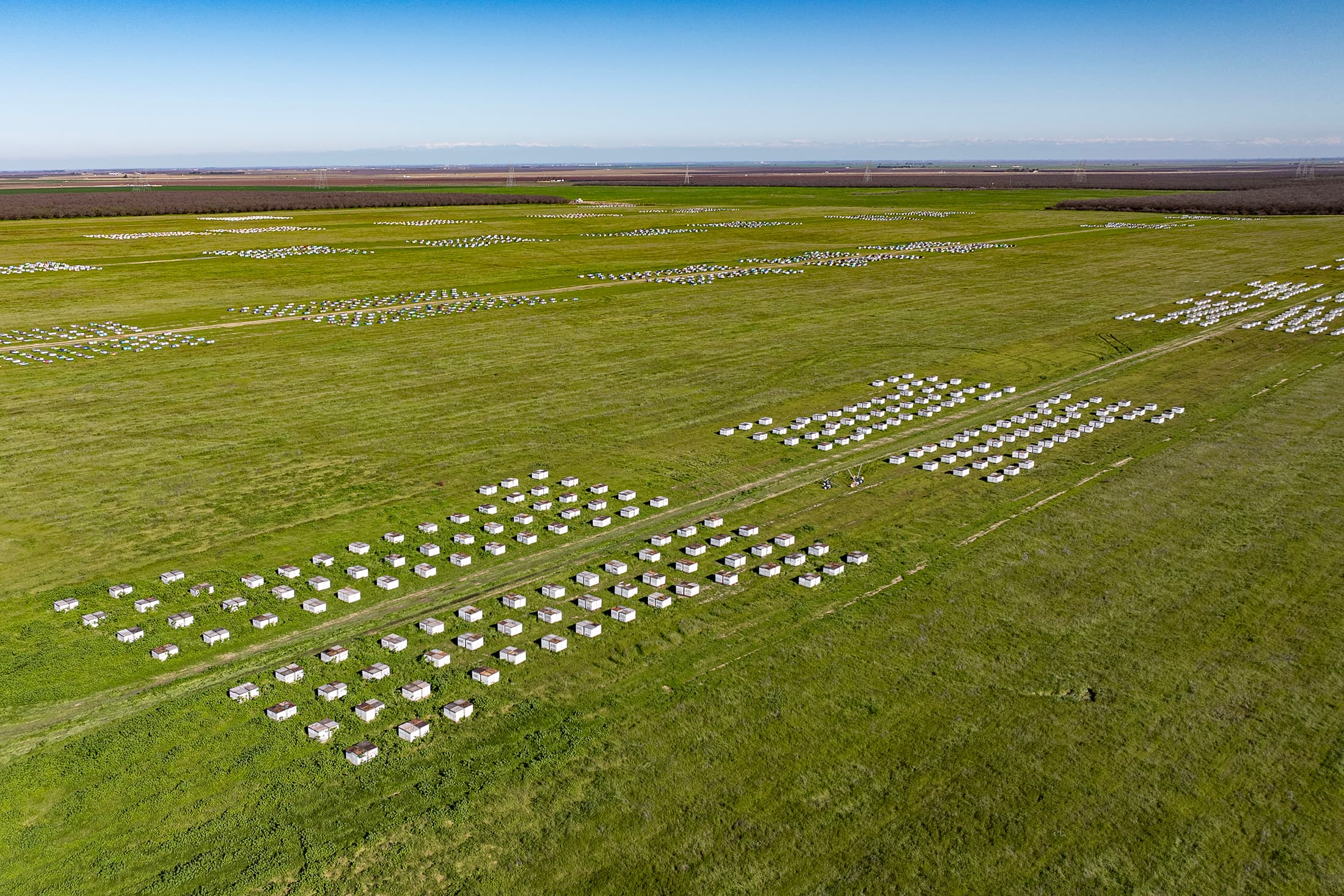
Beekeepers have been moving hives into California for several weeks, staging their colonies in open lands around the Central Valley. In recent days, trucks can be observed throughout the night moving hives into the orchards ahead of the bloom. The colder morning temperatures and foggy conditions have allowed beekeepers to extend their nightly work into the hours shortly after sunrise.
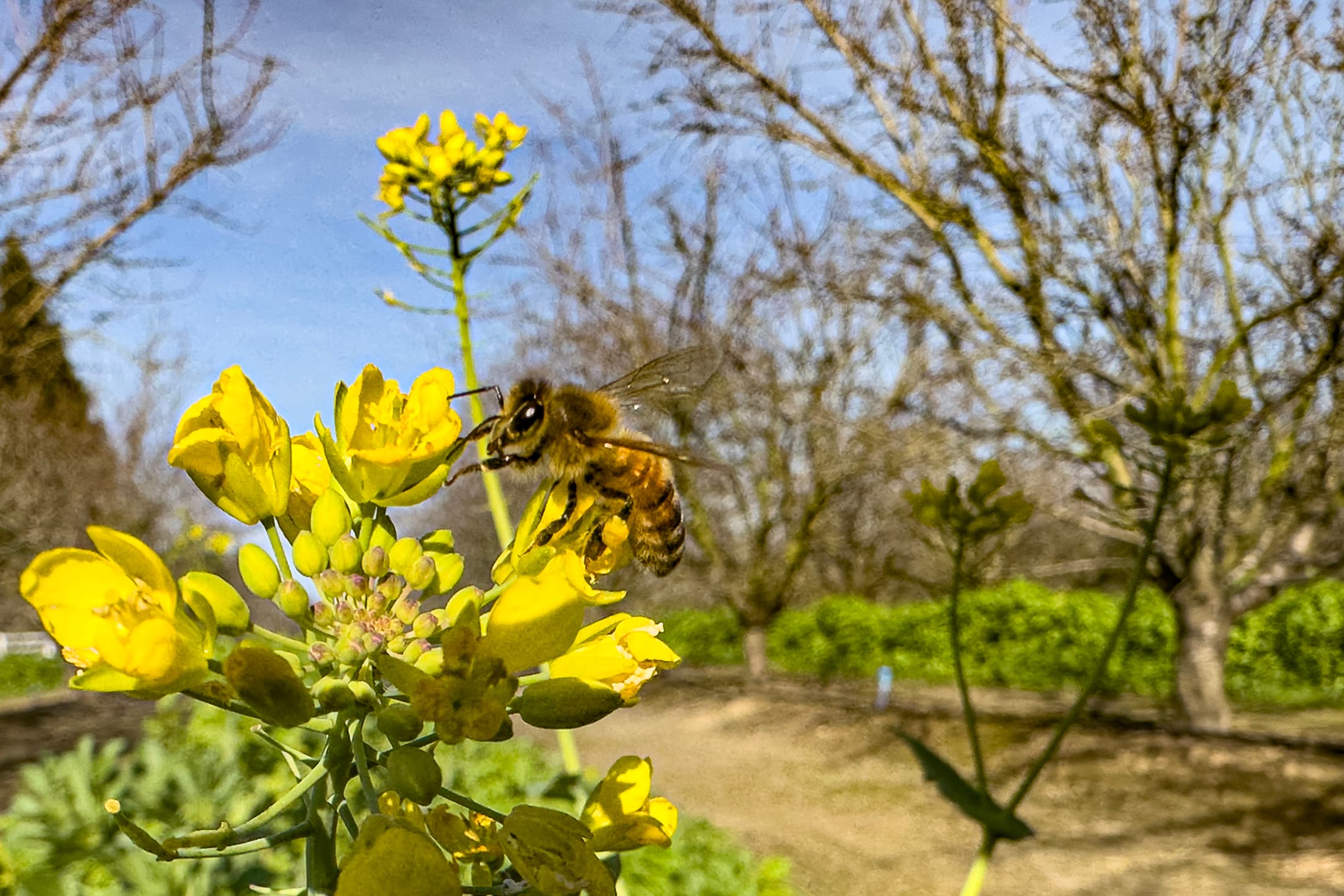
Growers who planted flowering cover crops within their orchards after harvest gained some benefit from the early rains. The ample soil moisture provided excellent conditions for seed germination and early winter growth. These flowering plants provide forage for the honeybees prior to the almond bloom. Cover crops also provide alternative forage during the bloom. Assuming that an ample number of bees have been placed in the orchard, they will normally strip the pollen released by the almond flowers each day by mid-afternoon. After the almond pollen has been removed, having a flowering cover crop eliminates the desire to leave the orchard in search of additional forage. This serves to anchor the bees within the orchard, enhancing pollination opportunities for the almond crop.
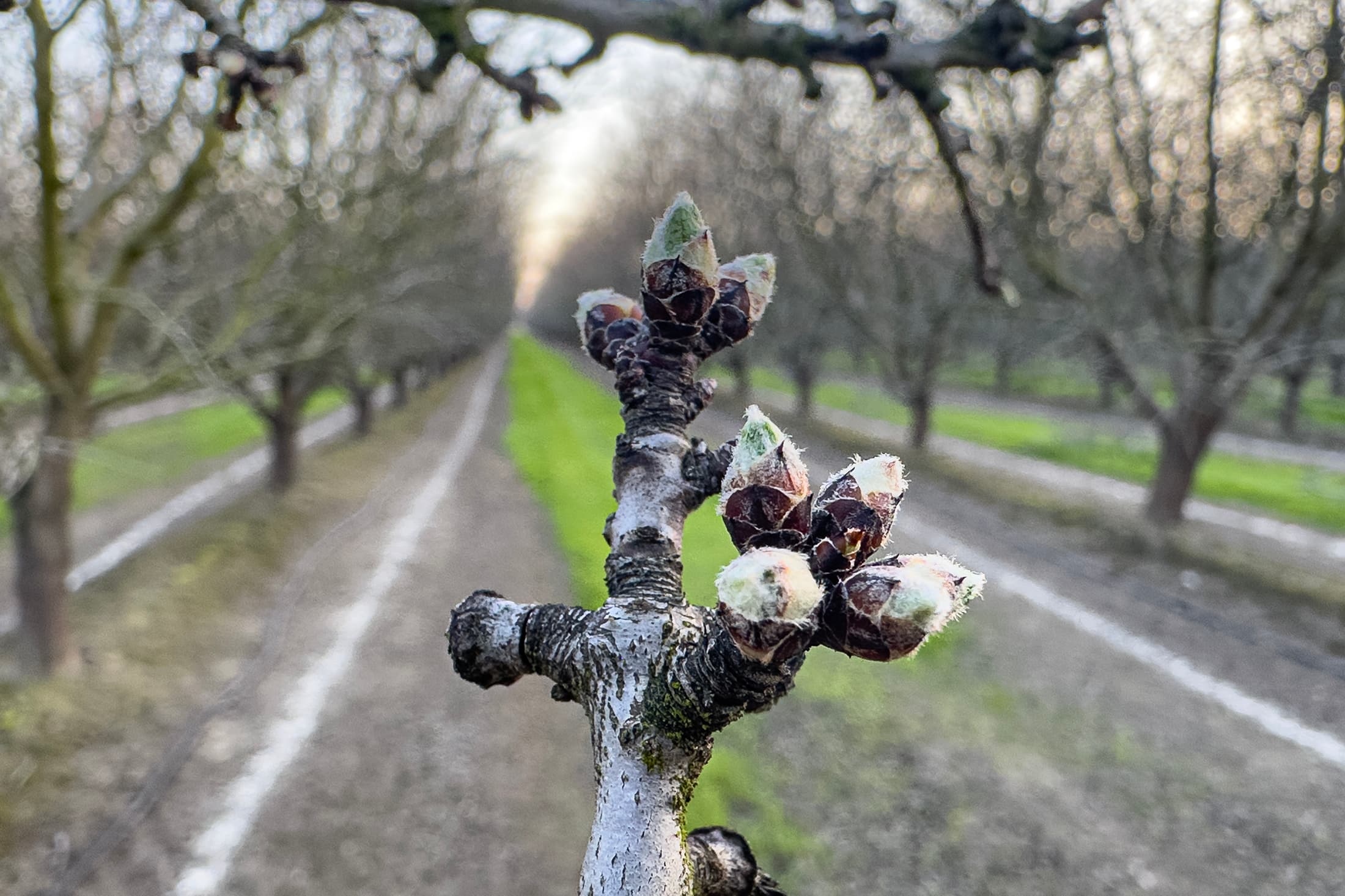
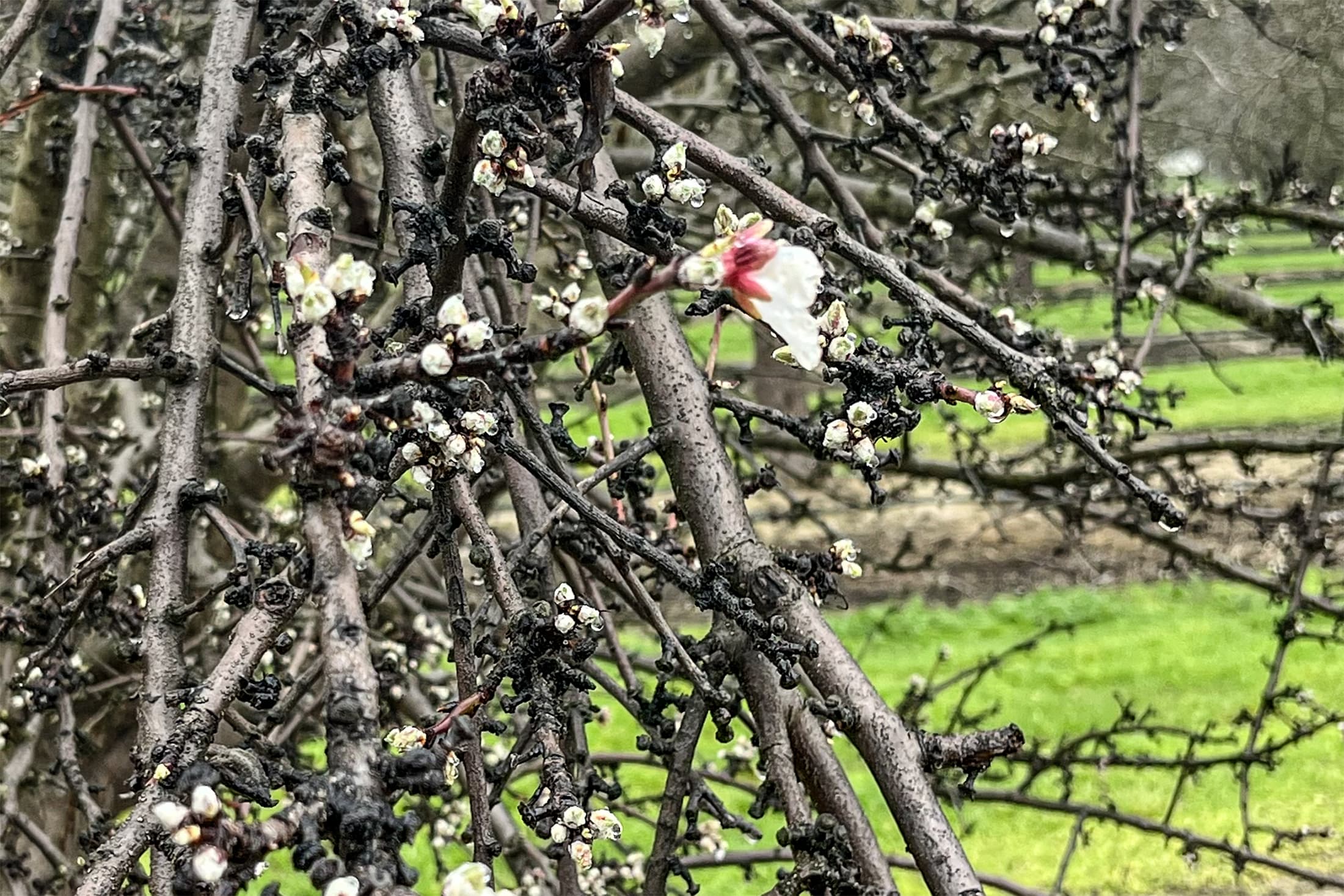
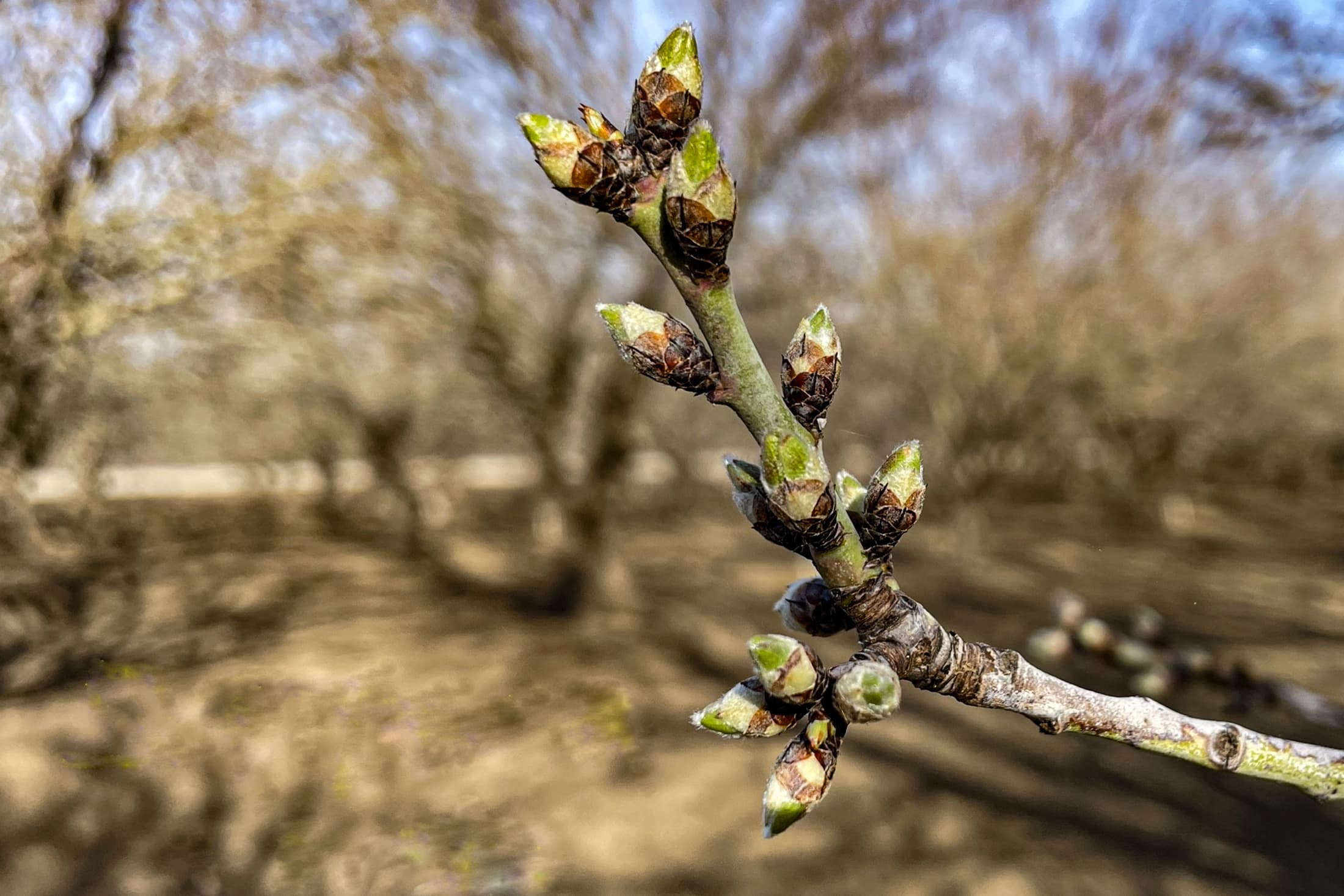
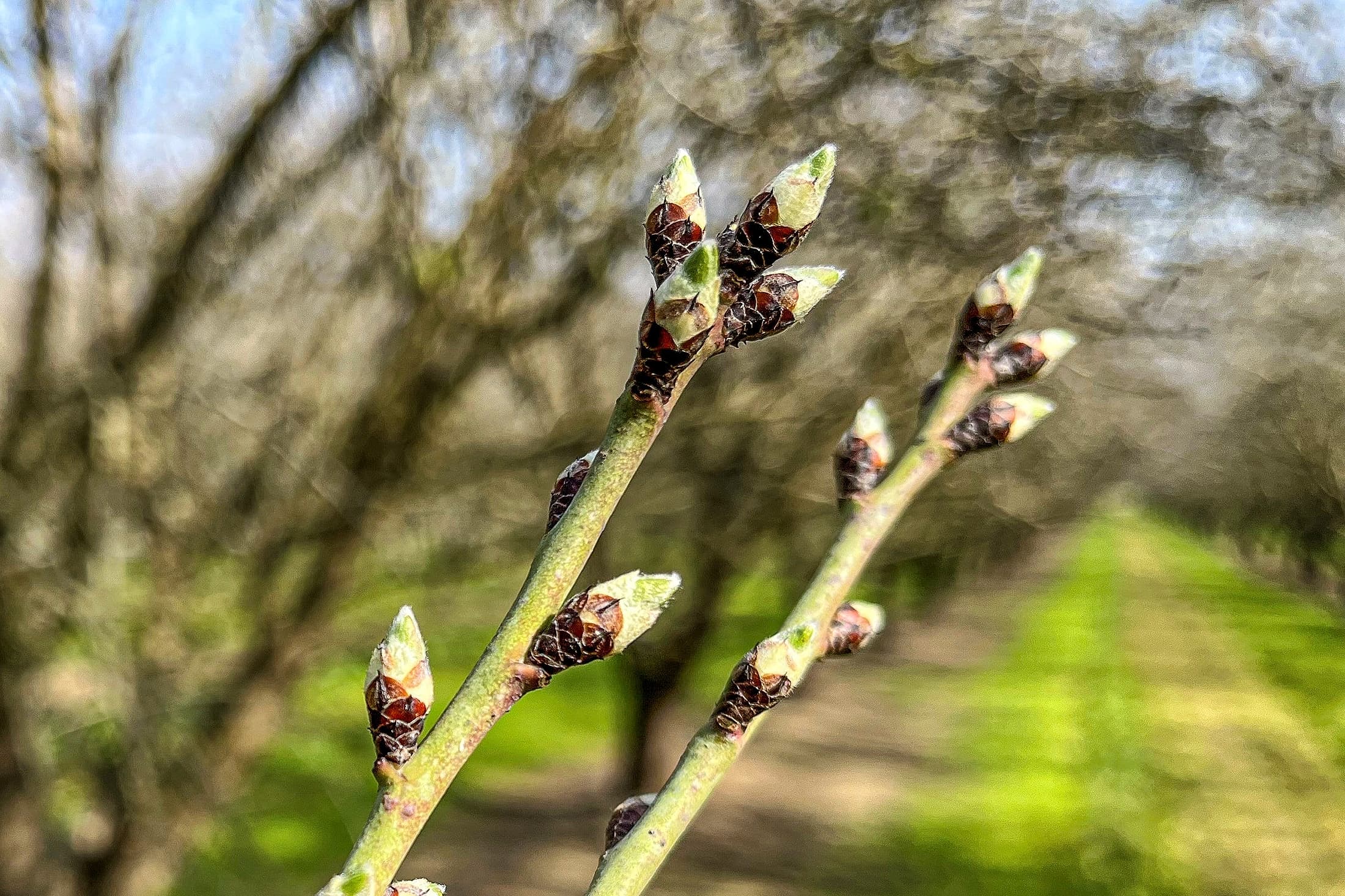
Observers are reporting that dormant buds on early blooming varieties have been swelling in size and are moving into green tip stage in advanced areas of the valley. Some open flowers have been observed in isolated orchards around the valley, typically in orchards that were under excessive stress at the end of the 2025 growing season. We anticipate the first measurable proportion of flowers will be available for pollination along the west side of Colusa County during the first week of February and that our first bloom report will be posted on Monday, February 9, 2026.
By Mel Machado
Photo Credits: Austin Jackson, KC Clendenin, Justin Elam and Mel Machado