Crop Progress Report – February 23, 2026
This report covers the conditions and activities observed from February 16 to February 22, 2026. Written updates will be posted regularly on Mondays throughout bloom and will have a more regionalized focus. Additional updates will be posted as needed.
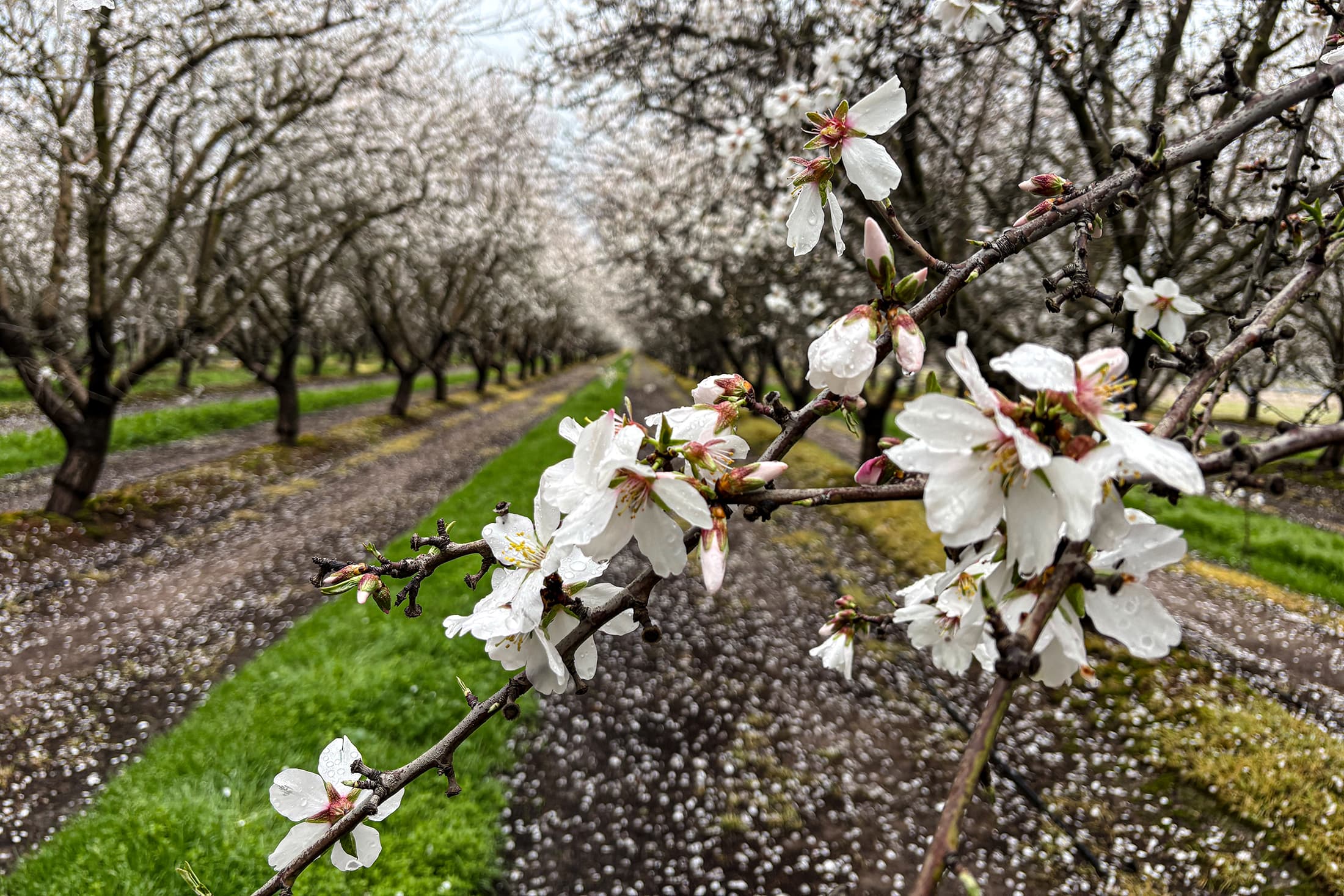
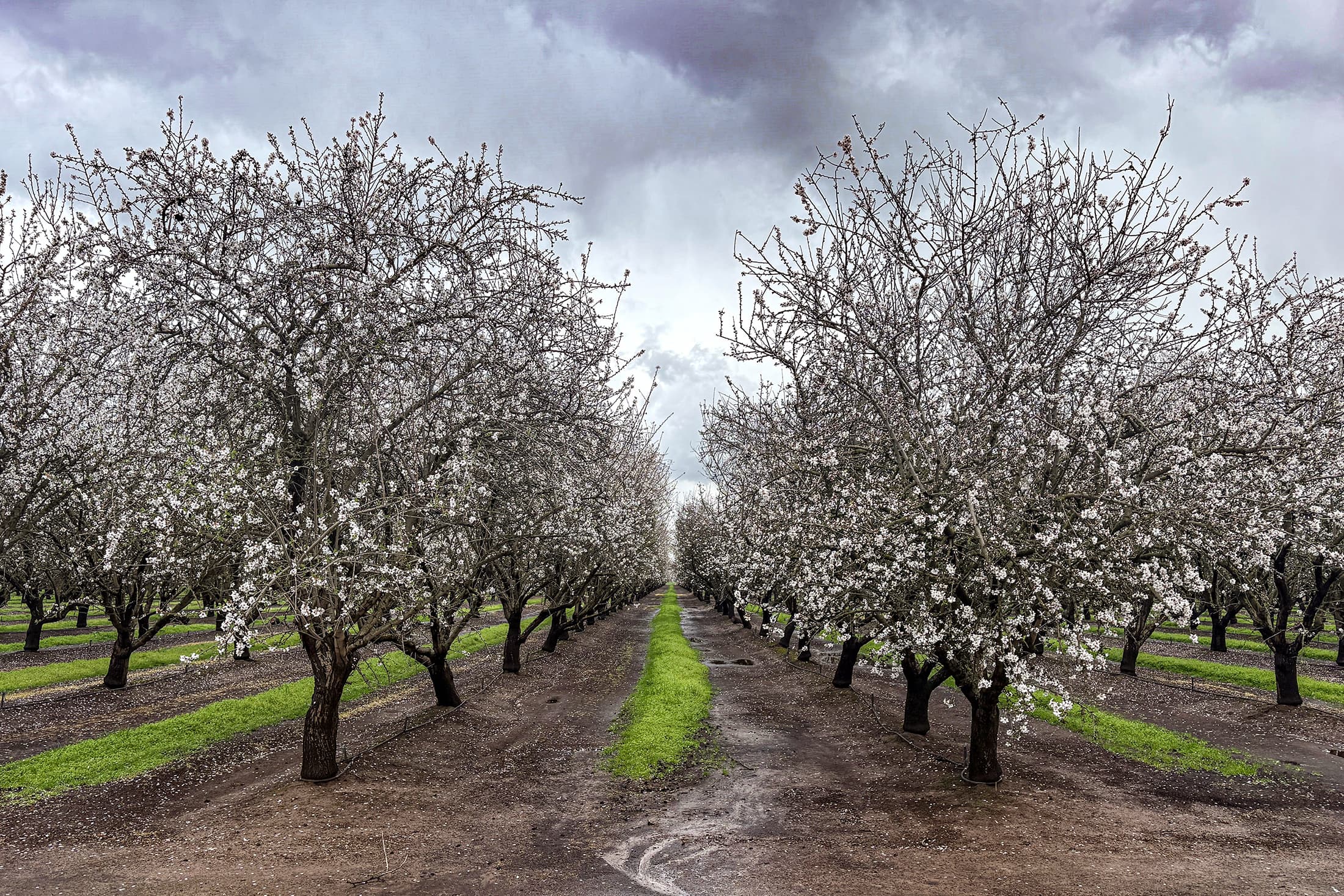
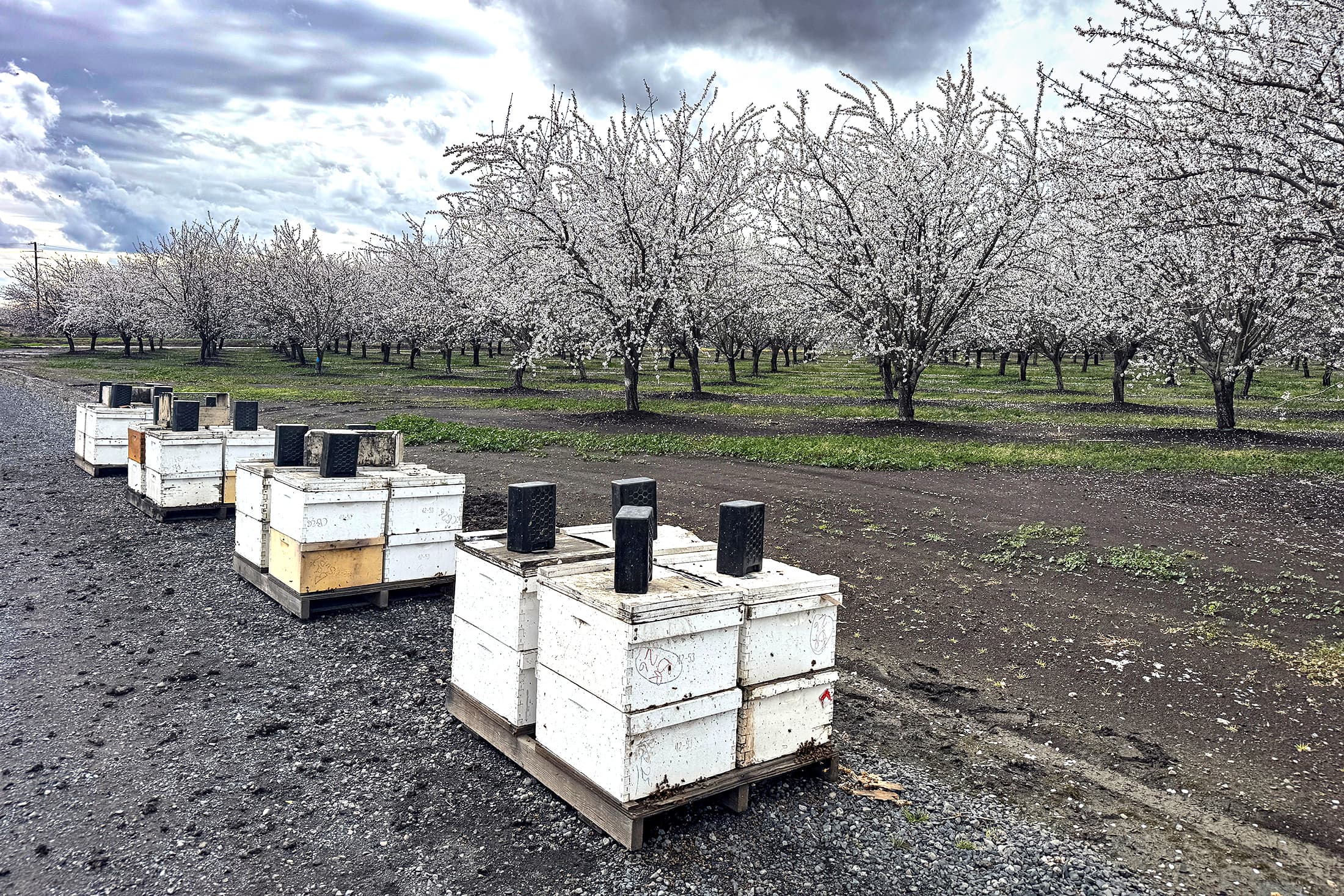
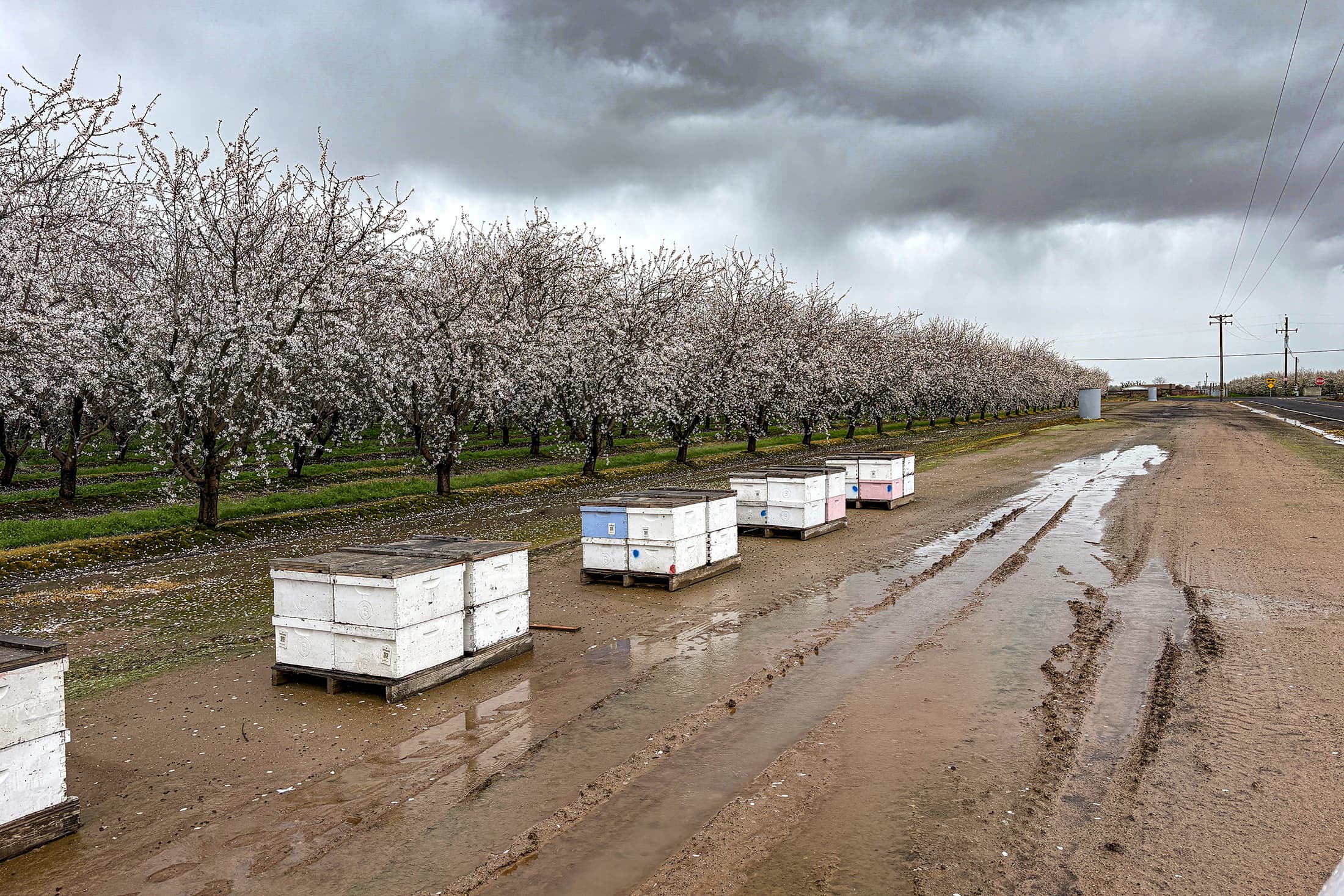
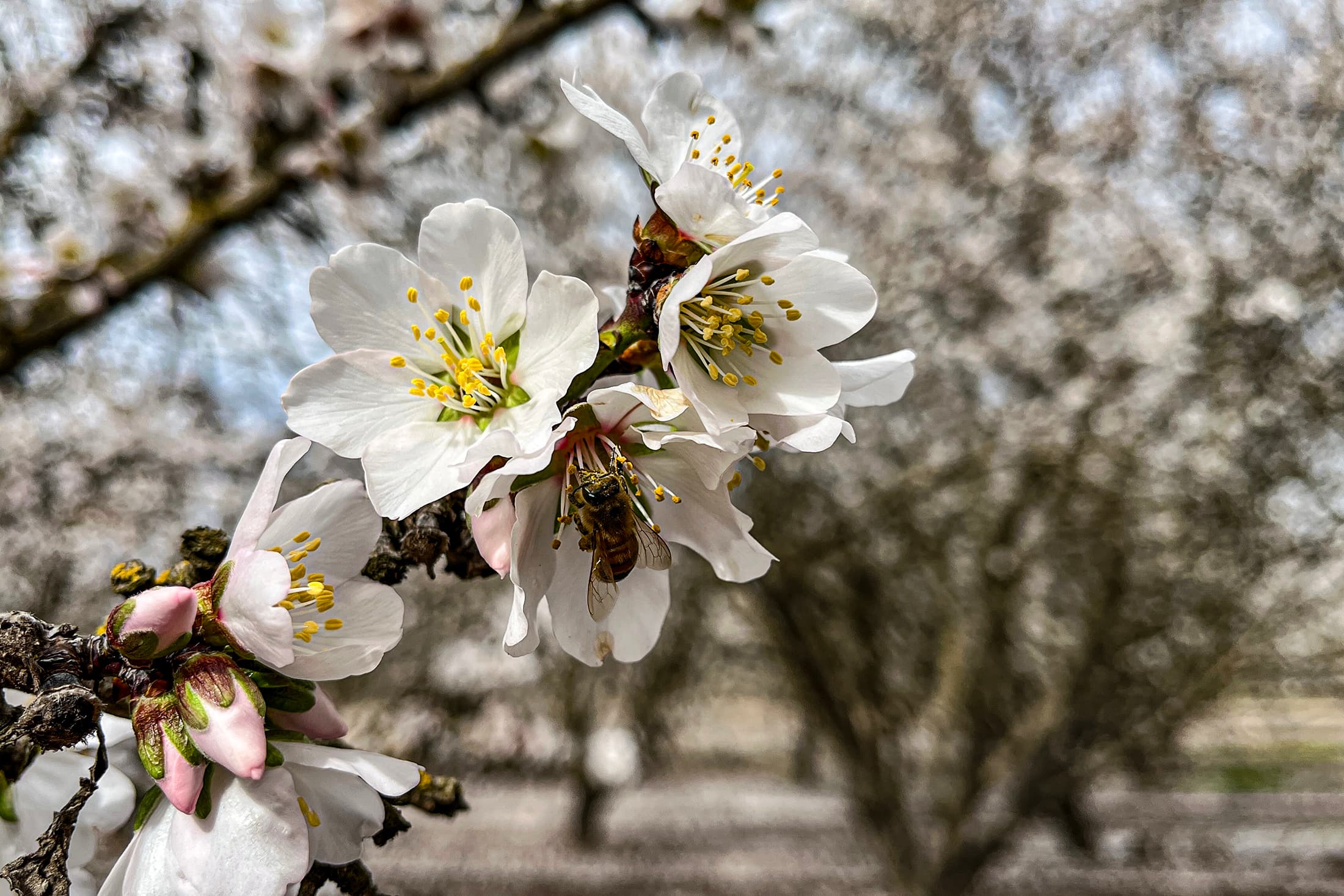
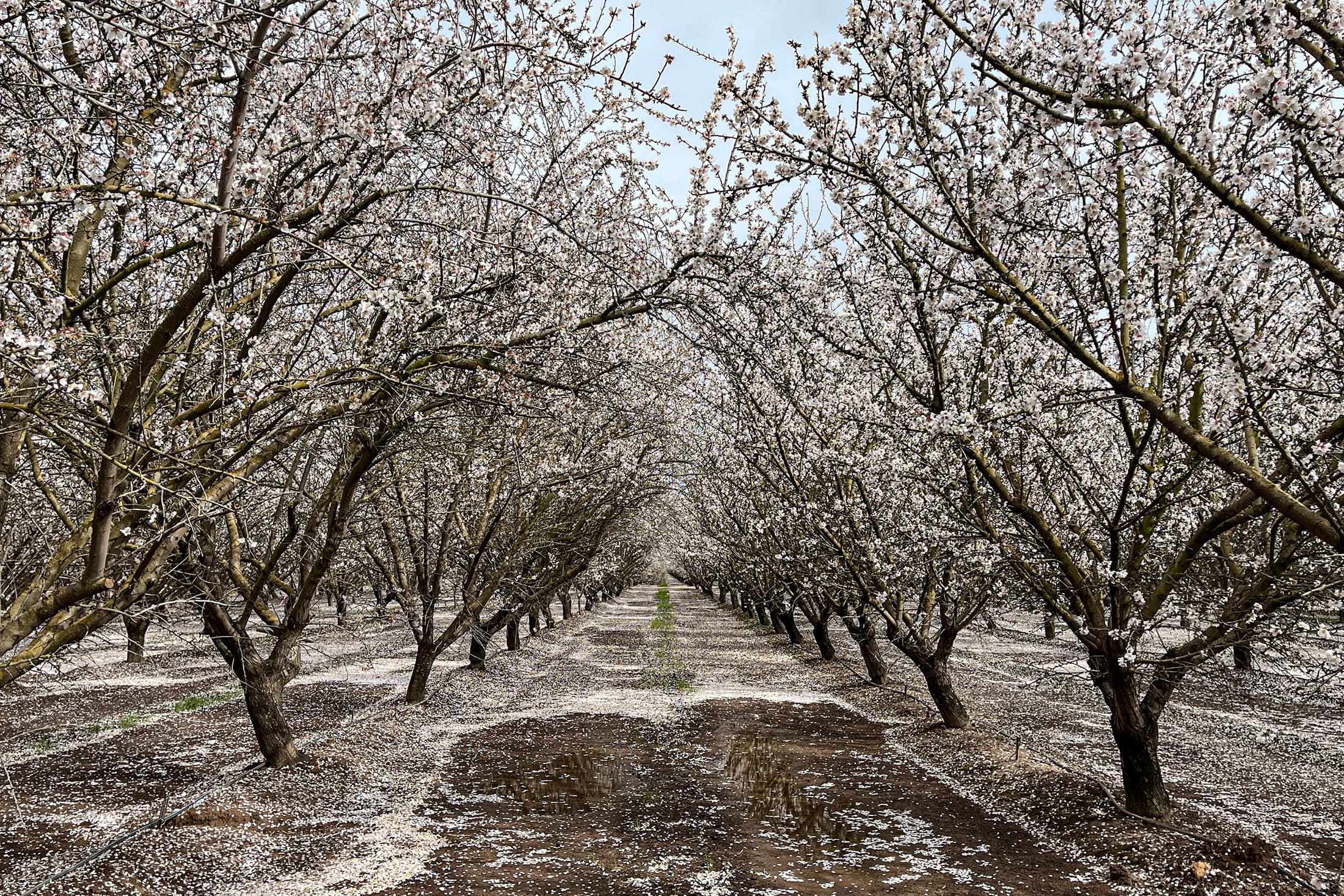
Peak bloom for many of the almond varieties coincided this week with a weather system that brought heavy rain and gusting winds to most of the growing regions. The Sacramento Valley saw as much as two to three inches of rain and even sightings of snow on the valley floor. Of particular concern there, areas in Glenn County west of I-5 saw temperatures down to 27 degrees for an extended time. Areas of the San Joaquin Valley also got as much as one to three inches of rain and saw temps in the low 30’s. Given the low temperatures that came with the system, growers across the state were inspecting buds for signs of frost or hail damage, though none were observed by our team at this time. These weather conditions significantly limited bee activity for the period. However, bees were observed to be out in force during short midday breaks between showers and wind gusts, even at temperatures down to 48 degrees.
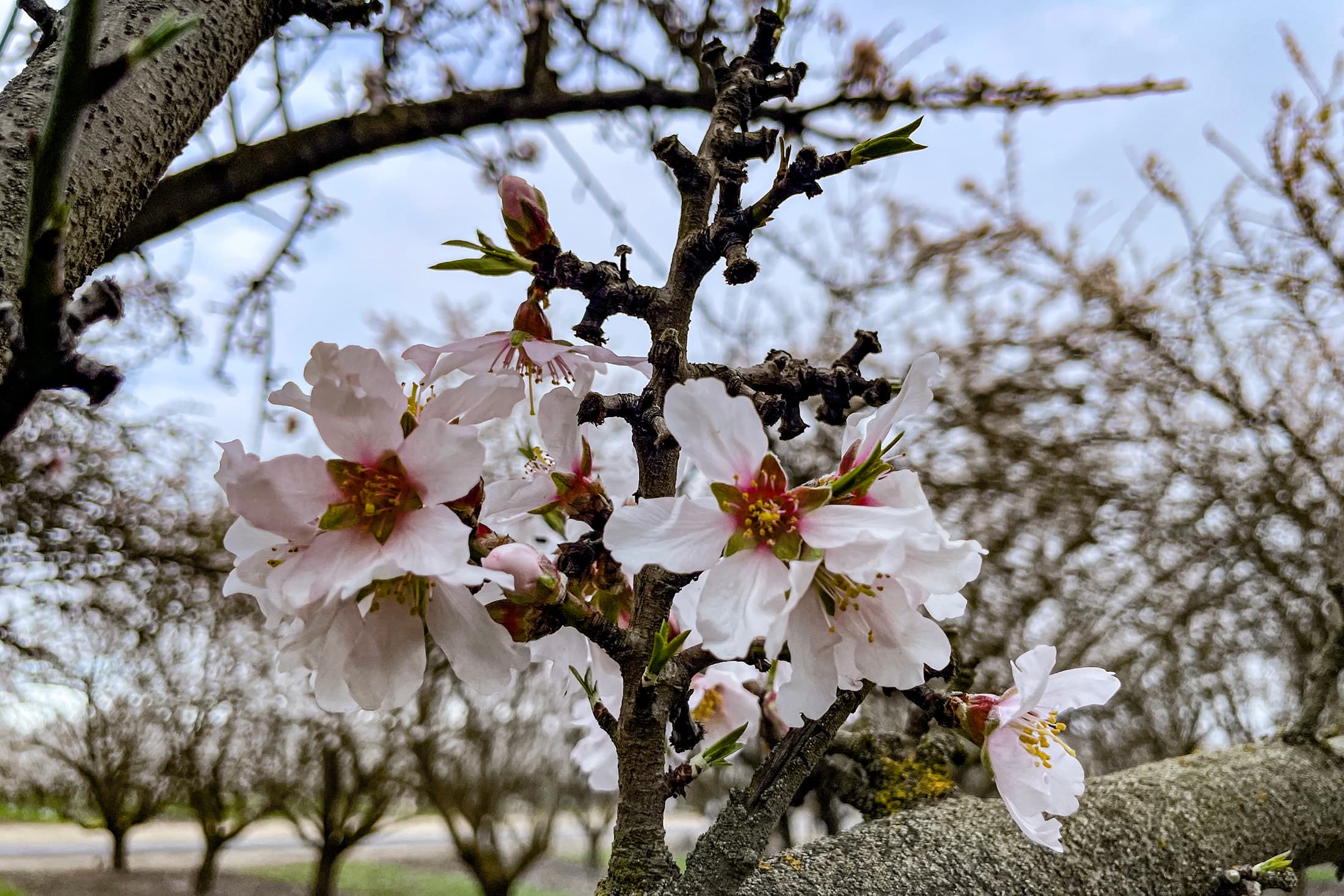
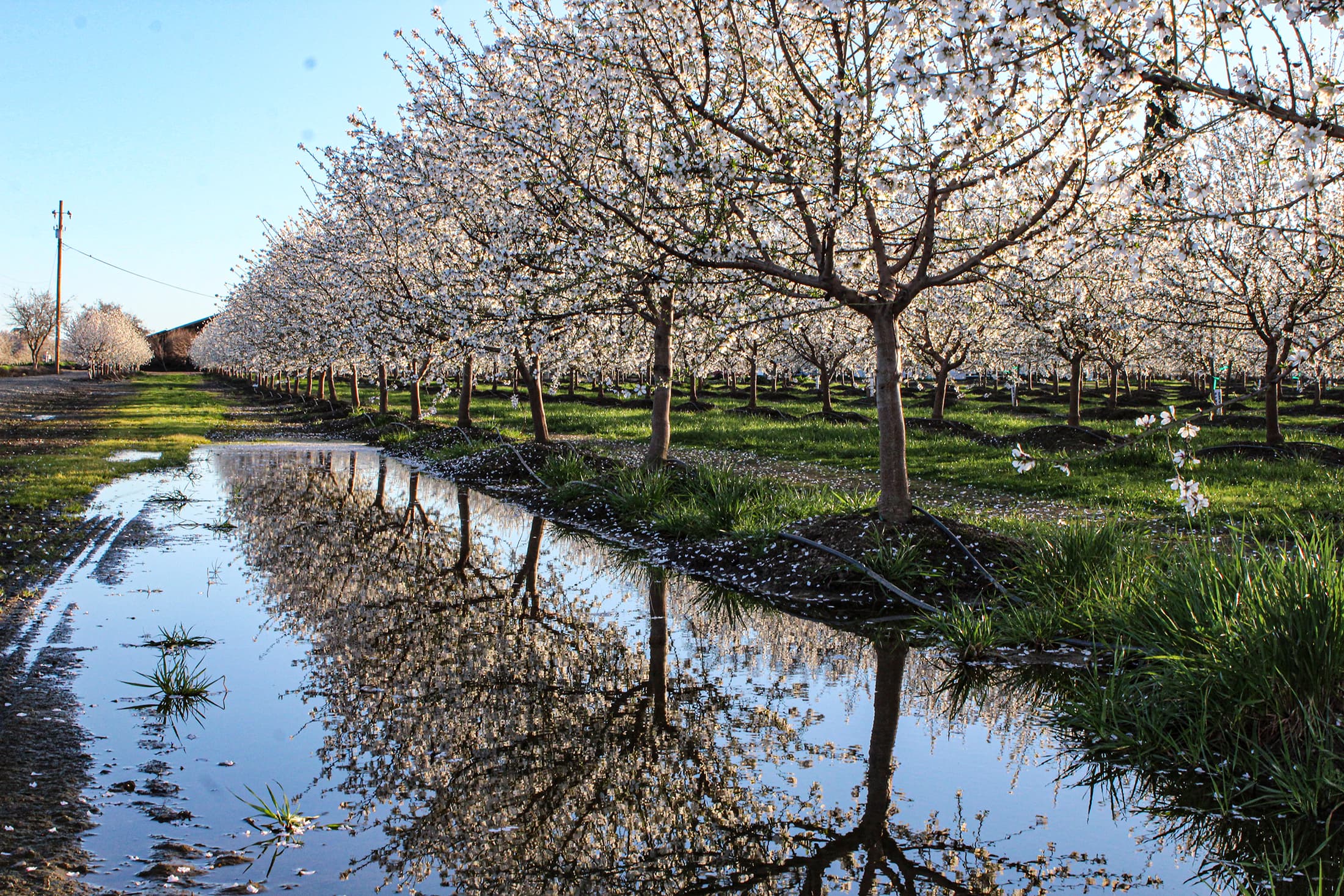
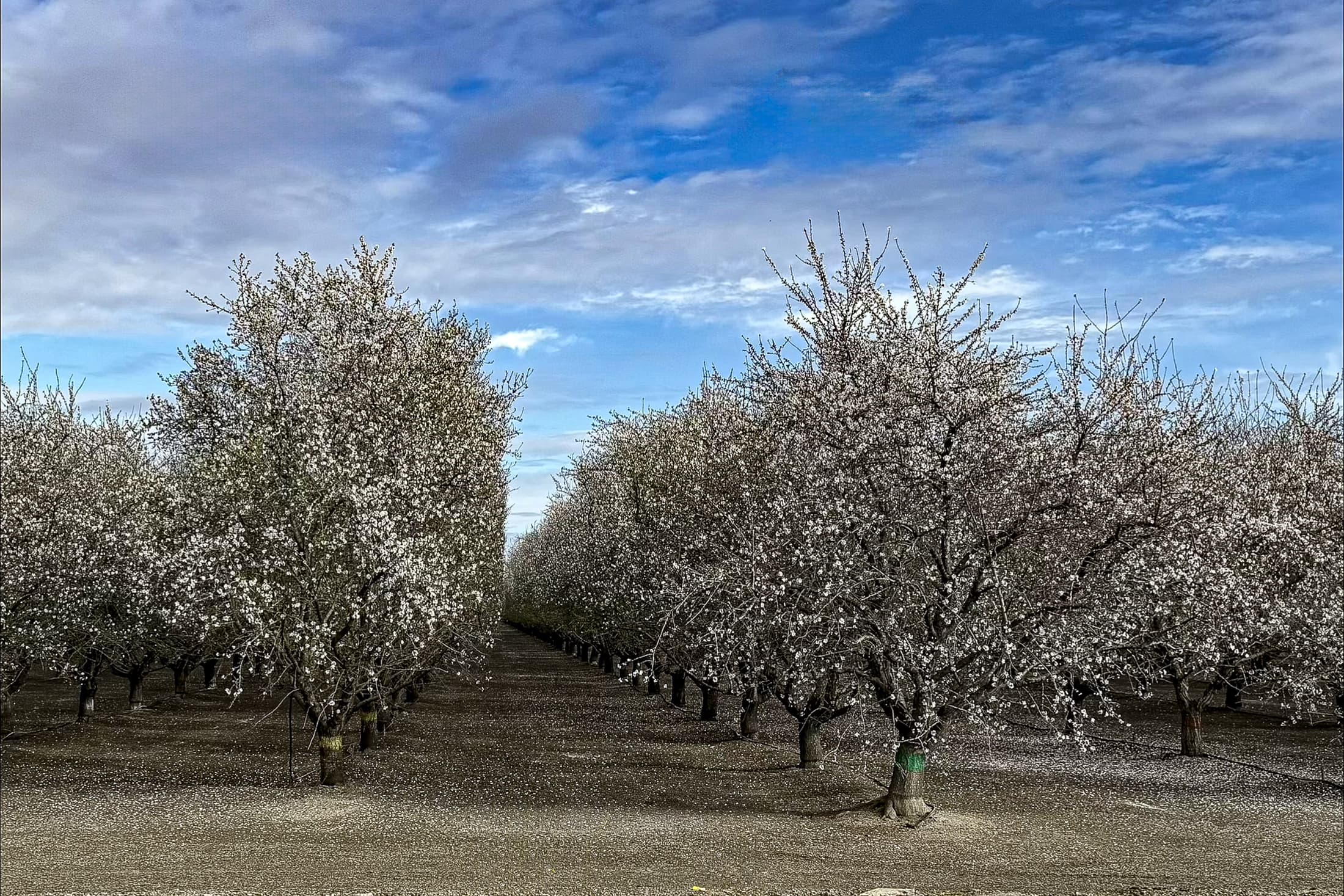
As stated in last week’s report, the most advanced plantings in the Durham area of Butte County saw their peak blooms. This period saw the peak of Nonpareil and Monterey bloom for most of the rest of the growing regions. Other pollenizer varieties such as Fritz and Aldrich peaked at the end of the last period and into the start of this period and are now well into the petal fall and jacket stages.
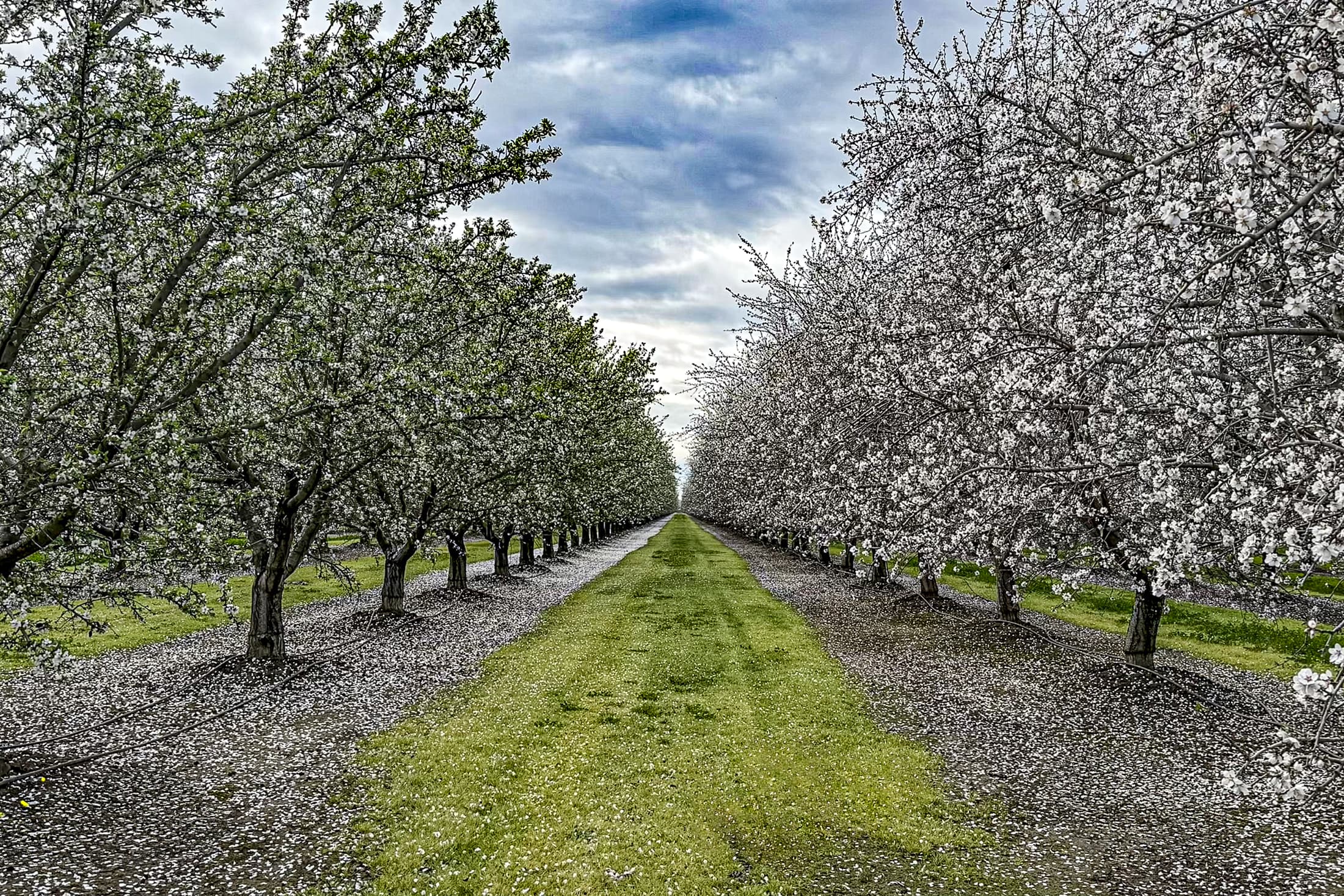
While Independence has been observed to be more varied from region to region this season, it too generally peaked during this period. As was noted last week, bloom in Butte Padre plantings was still not completely uniform, but accelerated despite the weather and will soon peak in most areas. Observers reported seeing leaves pushing in almost all varieties as well.
In addition to limiting bee activity, the weather this week limited grower in-field activity. Mike Doherty, a board director and grower in Colusa County, summed up grower activity for the week saying, the “Ability to enter the orchards to apply fungicides and foliar fertilizers was compromised. Some orchards went unprotected while waiting for aerial applications.”
Growers who were able to make applications will now begin weighing the coverage duration to determine whether another should be applied in addition to typical post-bloom treatments.
By: Anthony Scudder, Regional Manager
Photo Credits: Christine Ivory, Austin Jackson, Ashley Correia, Nicole Jansen and KC Clendenin